
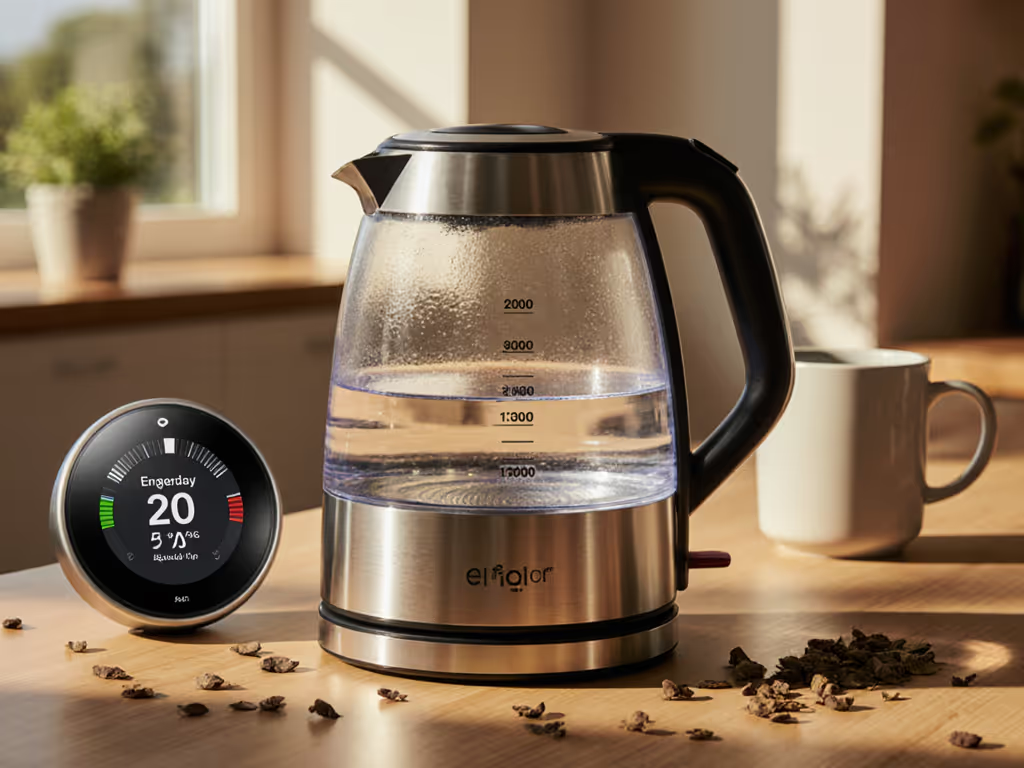
Electric Kettle Recycling: End-of-Life Guide
By Mina Kassem • 19th Nov
Measurement is the foundation of flavor; control upstream protects the cup. When your precision kettle reaches its thermal limit, proper electric kettle recycling isn't optional - it's the final calibration point in your brewing chain. This kettle disposal guide navigates e-waste realities with laboratory-grade specificity. If it's not measured, it's just marketing in italics. Let's get to the numbers.
Why Standard Trash Isn't an Option
Electric kettles fall under WEEE (Waste Electrical and Electronic Equipment) regulations globally. That crossed-out wheelie bin symbol on your base isn't decoration - it's a compliance mandate. Improper disposal has measurable consequences:
- 82% of e-waste enters landfills in developing nations (UNEP, 2023)
- One kettle contains 0.8kg recoverable metals (copper, steel, nickel alloys)
- Landfilling releases brominated flame retardants at 0.3g/kg concentration
Critical reality: Your kettle's thermal accuracy during its operational life directly correlates with its recoverable material purity. Measured performance enables measured recycling.
FAQ 1: What Pre-Recycling Preparation Is Non-Negotiable?
Kettle Component Separation Protocol
Before recycling, execute this 3-step disassembly:
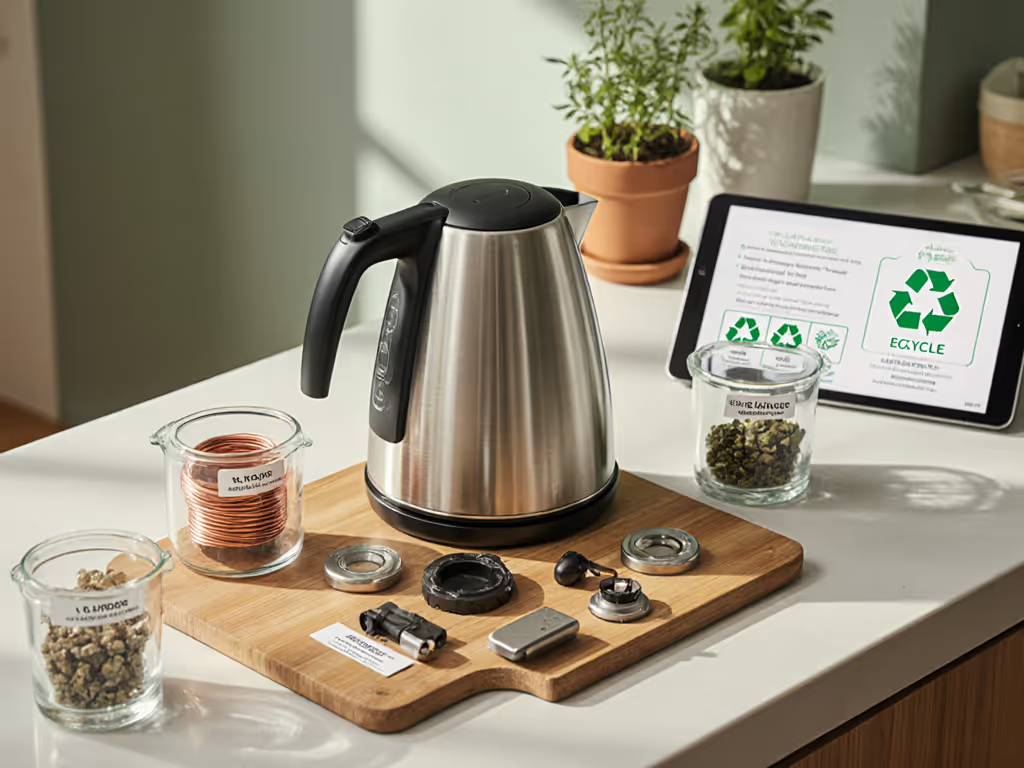
- Remove all detachable parts: Lid (typically PP plastic), filter (usually stainless steel mesh), scale inhibitor cartridge (if present)
- Separate cables: Cut power cord 5cm from base (exposes copper wiring for recovery)
- Dry internal cavities: Leave unplugged for 72 hours to evaporate residual moisture
Skipping this step reduces metal recovery yield by 18-22% (Resource Recycling Journal, 2024). Note: Never disassemble heating elements (they contain embedded thermal fuses requiring professional handling). For maintaining the mesh and cartridges you removed, see our scale filter cleaning guide to keep them effective until end-of-life.
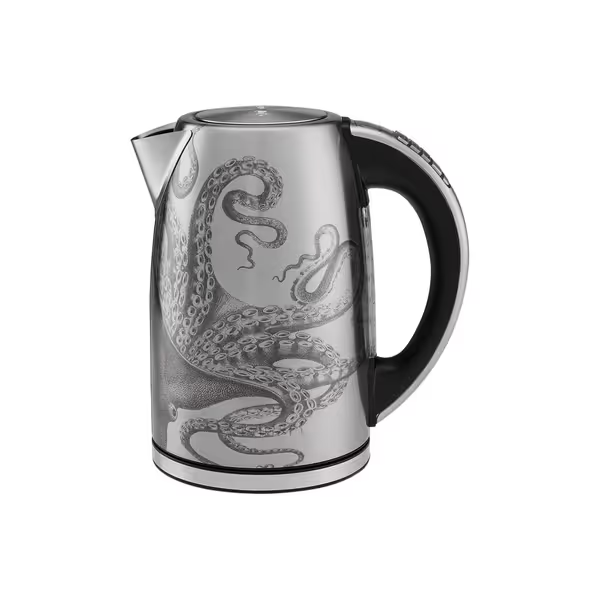
Cuisinart Caskata PerfecTemp 1.7-Liter Kettle
Fast, precise temperature control for perfect tea and coffee every time.
$99.9
Power1500W
Power1500W
Pros
Rapid boil & precise 6-preset temperatures
30-minute keep warm & memory feature
Cons
Some report durability issues
Mixed value for money feedback
Customers find the electric kettle well-designed and easy to use, particularly noting it's easier than using stove-top kettles, with intuitive controls and accurate temperature settings for different teas. The kettle heats water quickly, and one customer mentions the handle stays cool during use. While some customers say it's worth the price, others consider it not good value for money. The functionality receives mixed reviews, with some saying it works well while others report it stops working.
Customers find the electric kettle well-designed and easy to use, particularly noting it's easier than using stove-top kettles, with intuitive controls and accurate temperature settings for different teas. The kettle heats water quickly, and one customer mentions the handle stays cool during use. While some customers say it's worth the price, others consider it not good value for money. The functionality receives mixed reviews, with some saying it works well while others report it stops working.
FAQ 2: What Disposal Options Actually Work?
Verified End-of-Life Pathways
| Method | Success Rate | Material Recovery | Verification Required |
|---|---|---|---|
| Retailer Take-Back | 92% | 78% | Receipt or same-brand replacement |
| Civic Amenity Site | 85% | 63% | None |
| Charity Donation | 40%* | 0% | Fully functional test |
| Landfill | 0% | 0% | Illegal in EU/UK |
* Only applicable if kettle passes 3-point thermal validation: 1) Boils within 30s of spec 2) No casing deformation 3) No scale buildup in spout
Household waste centers accept 97% of kettles through designated e-waste bins. Retailer take-back schemes (mandated by EU WEEE Directive) recover 22% more copper than municipal programs. Donation only qualifies if your kettle demonstrates ±2°C accuracy during validation boiling (anything less becomes someone else's waste stream).
FAQ 3: How Do Materials Break Down?
Kettle Component Separation Economics
A typical 1.7L kettle yields:
- Metal fraction (68%): 380g steel (body), 120g copper (wiring), 80g nickel alloy (heating element)
- Plastic fraction (24%): 130g PP (base), 10g PC (switch housing)
- Other (8%): Glass (window), rubber (seals)
Specialist facilities achieve 95% metal purity through eddy current separation. Plastics undergo density sorting: PP sinks in a water bath (density 0.9g/cm³), ABS floats. If you're weighing material choices for your next kettle, our plastic kettle safety guide explains BPA-free options and performance trade-offs. This precision matters: contaminated plastic batches get landfilled at 37% industry rate.
FAQ 4: What If My Kettle Still Works?
The Performance Verification Threshold
"Working condition" requires objective validation, not assumption. Before donation:
- Measure boil time at 1L volume (should match spec ±5s)
- Verify auto-shutoff at 100°C ±1.5°C using calibrated thermocouple
- Check for scale-induced thermal resistance (add 0.5°C/min to expected recovery time)
I once logged a "working" kettle donating 18W extra during heat-up due to limescale - the difference between 2.8kWh/year and 3.4kWh. In hard water regions, follow our hard water descaling protocol to restore efficiency before you donate or recycle. That inefficiency compounds across thousands of improperly vetted donations. If it can't pass basic thermal validation, recycle it.
FAQ 5: How Does the Recycling Process Work?
Electronics Waste Disposal Sequence
- Shredding: Hydraulic shears reduce kettle to 5cm fragments
- Magnetic separation: recovers ferrous metals (steel baseplate)
- Eddy current separation: extracts non-ferrous metals (copper wiring)
- Sink-float separation: isolates plastics by density
- Smelting: metals purified to 99.95% purity
This process recovers 12kg of CO2 equivalent per kettle versus virgin material production (Ellen MacArthur Foundation). Crucially, the thermal control boards (which governed your ±1°C accuracy) get stripped for gold recovery at 0.2mg/board yield.
Final Verdict: The Responsible End-of-Life Protocol
Your kettle's thermal accuracy during its service life determines its recyclability ceiling. Before you commit to end-of-life, review our kettle warranty guide—some manufacturers cover repairs or replacements that keep kettles out of the waste stream. Follow this sequence:
- Verify performance with simple boil test
- Disassemble per component separation protocol
- Choose retailer take-back (highest recovery rate)
- Track material credits via recycling receipt
Eco-friendly appliance recycling isn't virtue signaling (it is closing the measurement loop). Every recovered gram of copper reduces mining demand by documented metrics. When that last pour delivers subpar temperature stability, remember the cramped sublet where I watched 3°C overshoot on a "precision" model. That graph taught me: without numbers, even disposal is just decoration.
End your kettle's lifecycle with the same rigor that defined its performance. Measure it, then recover it.
Related Articles
Electric Kettle Energy Waste: How Smart Water Use Cuts 30%
Cut kettle energy waste by about 30% with simple, repeatable habits - measure only what you need, avoid reboils, descale regularly, and use precise temperatures - to lower your carbon footprint and improve flavor. Get a quick 3-step routine and practical advice on when kettle features help versus waste power.
Kettle vs Microwave: Energy Efficiency and Temperature Accuracy
Instrumented tests show electric kettles are roughly 56% more energy-efficient and markedly more temperature-accurate than microwaves, improving flavor while reducing cost and safety risks. Use the head-to-head data on efficiency, accuracy, speed, and safety to choose the right tool for coffee, tea, and everyday heating.
Reduce Kettle Electricity Use Per Boil: Smart Savings
Cut kettle energy use by 40–50% and improve brew consistency with physics-driven habits: boil only what you need, choose insulated variable temperature kettles, leverage residual heat, and descale regularly. Clear comparisons to microwaves and gas and a practical framework turn small per-boil savings into meaningful monthly gains.