How Kettle Materials Affect Water Chemistry
By Ava Osei • 12th Apr
What's Really in Your Kettle (and What It Means for Your Water)
You're about to steep a perfect cup of green tea. The water hits 80°C (you've set it there deliberately). But before that water touches your leaves, it's already been shaped by something invisible: your kettle's materials. The container, the heating element, any residue clinging to the inner surfaces, all of it influences what ends up in your cup. This is why a friend of mine swore green tea tasted bitter no matter the brand. We set a variable-temp kettle to the right temperature, poured gently, and timed the steep. Their face at the first sip said everything. The ritual wasn't broken by precision; it was saved by it. Understanding why materials matter transforms that understanding from curiosity into confidence.
FAQ: Kettle Materials and Water Chemistry
Does the kettle material actually change my water?
Yes, though the effect ranges from negligible to significant depending on what material touches your water and for how long. The most common concern is plastic kettles, which can leach compounds into hot water over time.[7] Glass and stainless steel are chemically inert, meaning they won't leach harmful substances into water.[5] However, even "neutral" materials can indirectly affect water chemistry through their role in heating, cooling, and limescale accumulation.
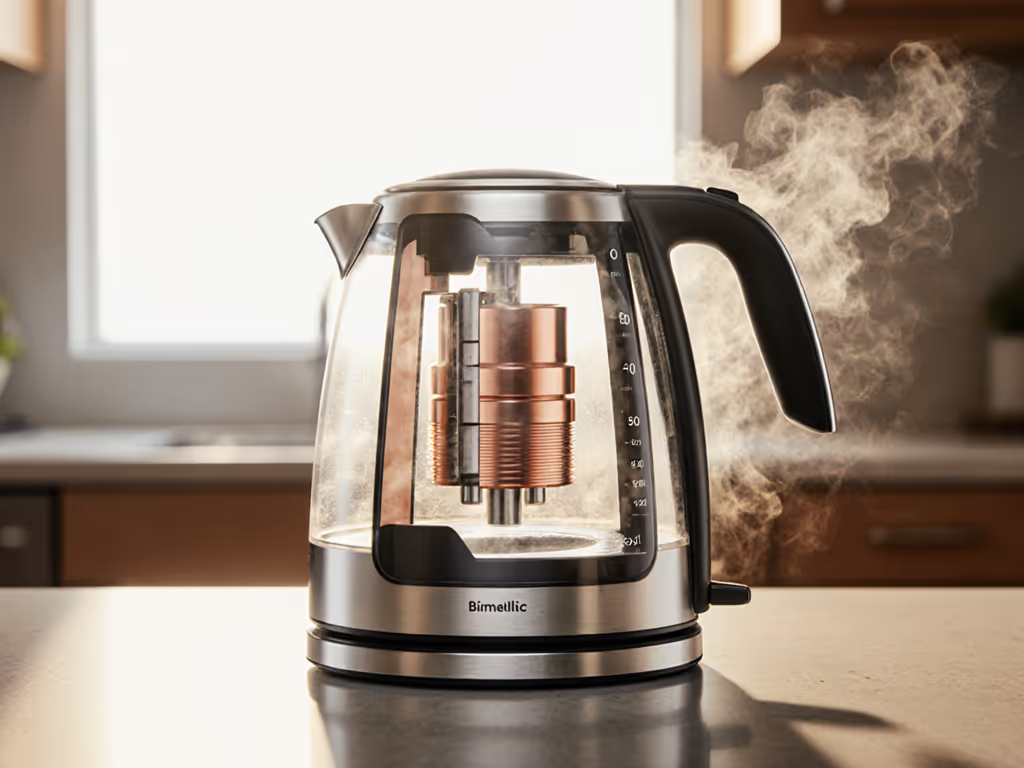
The heating element is where the most direct influence happens. When water comes into contact with a heating element made of nichrome (nickel-chromium alloy), the element itself doesn't dissolve into your water under normal use. It's designed to withstand high heat and resist corrosion.[1] But the efficiency of that element depends on whether limescale coats it, and that's where material choice starts to reshape your water's composition.
What's the connection between limescale and water chemistry?
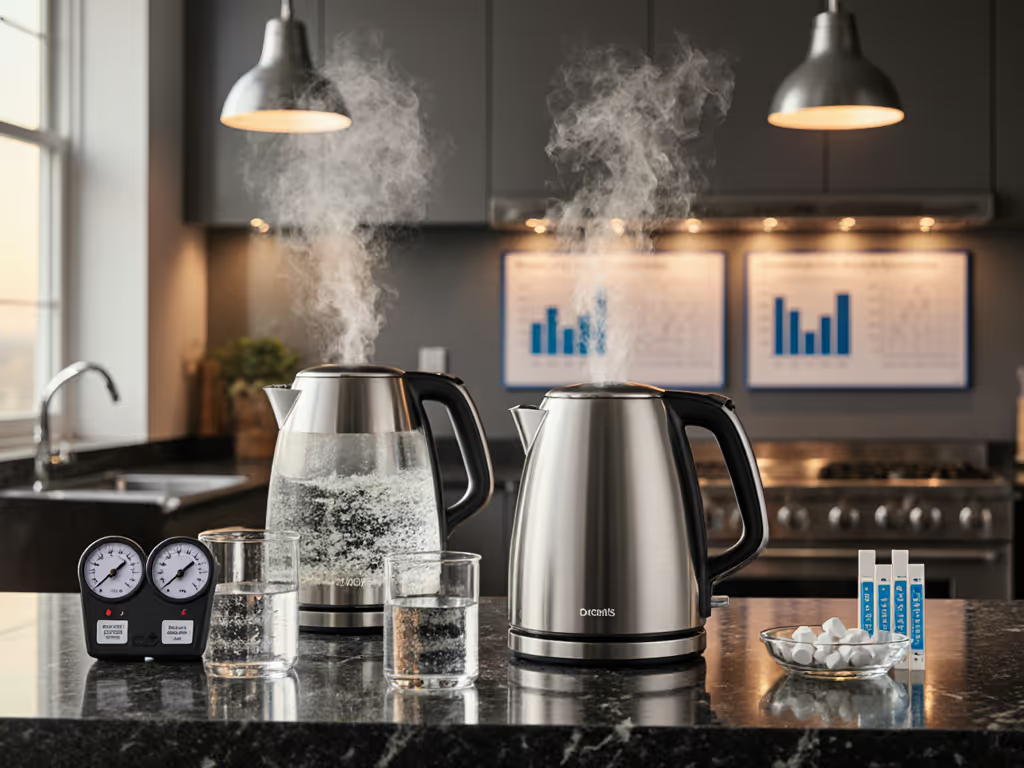
Limescale is calcium carbonate, a mineral deposit that builds up in hard-water areas. The chemistry is straightforward: as minerals accumulate on your heating element, they create an insulating barrier. This doesn't just waste energy, it changes when and how your water reaches target temperature. More importantly, limescale buildup is a sign that mineral-rich hard water is already in your kettle, and if it's not managed, it affects both flavor and the appliance's lifespan.
The data is clear. Even light limescale buildup (1-2 mm) reduces heating efficiency by about 8%, while heavy buildup (5 mm or more) can slash efficiency by up to 35%.[2] This matters because inefficiency means longer heating times, uneven temperature distribution, and (if you're using a keep-warm function) inconsistent water chemistry as some water cools while other portions stay hot. If your area has hard water, see our hard water descaling guide for region-specific protocols to restore efficiency and flavor.
Precision is a habit, not an advanced setting.
A concealed heating element (one hidden under a stainless steel plate) is less prone to direct limescale contact than an exposed element at the bottom of the tank.[5] This design choice directly supports water chemistry consistency because the element stays cleaner longer, meaning your heating is more predictable and your water reaches the right temperature reliably.
Does stainless steel vs. glass change the water taste?
Both are chemically inert, and they won't leach flavor or compounds. For a deeper explanation of how materials influence flavor at a molecular level, see our kettle materials and taste guide. The taste difference you might perceive comes from how each material handles heat, not what it contributes to the water.
Stainless steel (grades 304 or 316) conducts and retains heat very efficiently.[5] This is an advantage: your water reaches target temperature quickly and stays there, supporting repeatable brewing. The tradeoff is that stainless steel can show wear (fingerprints, minor discoloration) in hard-water areas, though high-grade stainless resists corrosion well.
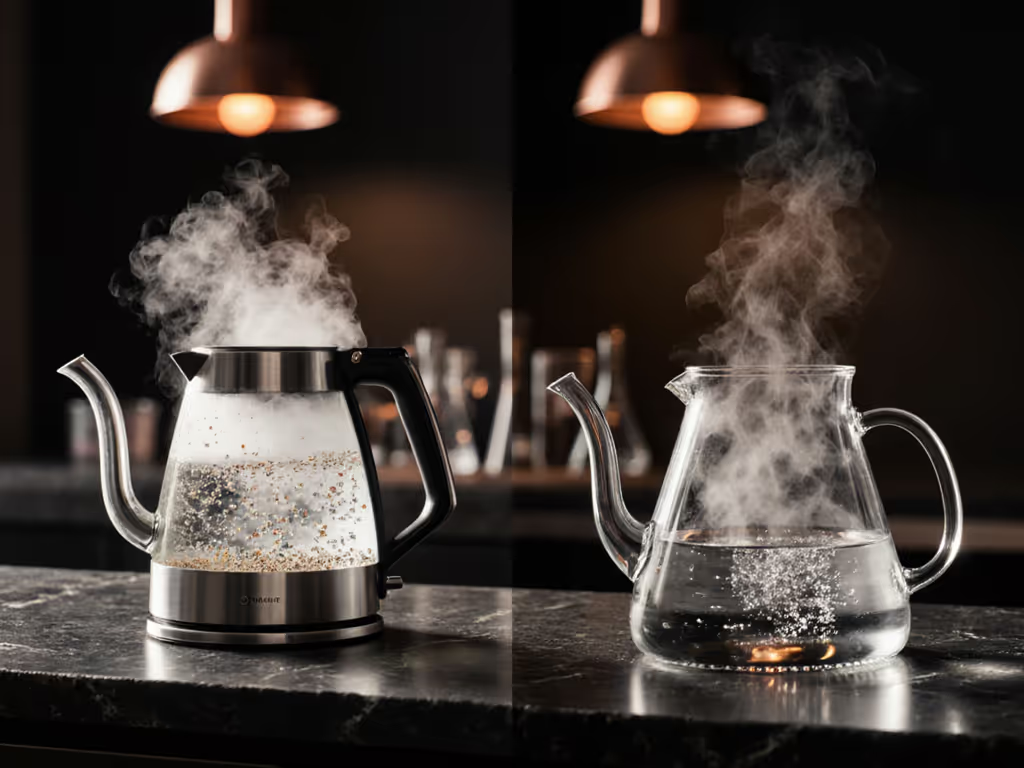
Glass kettles offer visual transparency (you can see water color and any deposits), but glass is more fragile and doesn't retain heat as effectively as stainless steel.[3] If keep-warm is important to you, glass kettles may cool noticeably faster, which means reboiling (and more energy use). However, glass is an excellent choice if you want zero leaching risk and don't mind pouring from a cooler vessel.
What about plastic kettles: is the risk real?
Yes. Plastic kettles, especially entry-level models, can leach compounds into hot water.[7] Plastic also has long-term structural weaknesses: under repeated heating and cooling, plus internal pressure, plastic can warp and lose dimensional stability over time. Joints become less watertight, and the appliance may leak or fail after a few years of regular use.[5] This isn't always visible at first: it's silent wear.
If budget is tight, plastic works for occasional use. But if brewing is part of your daily routine, stainless steel or glass is the safer, more reliable choice. Your water stays neutral, and the kettle lasts years, not months.
Does water pH actually change in the kettle?
Minor shifts are possible, especially in kettles with heavy limescale or plastic exposure. Hard water (high in calcium and magnesium) is naturally slightly alkaline. When limescale builds up, it's adding more mineral compounds to the water, subtly raising pH. Plastic leaching can introduce compounds that affect pH indirectly. However, the pH shift is usually small enough that it matters more for precision coffee or competition-level tea than for everyday brewing.
What does noticeably affect pH is leaving boiled water sitting in your kettle. Dissolved minerals continue to precipitate and stick to the sides, concentrating their effect on remaining water.[4] The habit of emptying your kettle after use (part of a repeatable maintenance checklist) directly supports water chemistry stability.
How does the heating element material affect my water?
High-quality heating elements (usually nichrome alloy) don't leach into water, but their design and maintenance do. Exposed elements collect limescale easily; concealed elements are protected.[5] Concealed designs also distribute heat more evenly, meaning your water reaches and holds target temperature more consistently.[2]
Consistent temperature equals consistent extraction: your tea steeps at the right speed, your pour-over flows predictably. This repeatability (secure, stable, repeatable) is how material choice translates to flavor.
What's the descaling connection to water chemistry?
Descaling removes the mineral barrier, restoring heating efficiency and preventing minerals from concentrating in your water. Regular descaling (every 2-8 weeks, depending on water hardness) isn't just maintenance; it's a chemistry reset.[2] A kettle with heavy limescale is subtly altering your water's mineral profile every time you heat it. A clean kettle gives you the water you actually put in.
Stainless steel kettles with concealed elements and removable filters make descaling simpler, which means you're more likely to do it consistently. Design and material choices that support habit-building are investments in water chemistry control.
Practical Takeaways: Material Choices for Consistent Water
- Choose stainless steel (grade 304 or 316) or glass if brewing is regular. Avoid plastic for daily use.
- Concealed heating elements stay cleaner and distribute heat more evenly, supporting temperature precision.
- Descale every 2-8 weeks in hard-water areas. This single habit preserves both efficiency and water chemistry.
- Empty your kettle after use to prevent minerals from reconcentrating as water sits and cools.
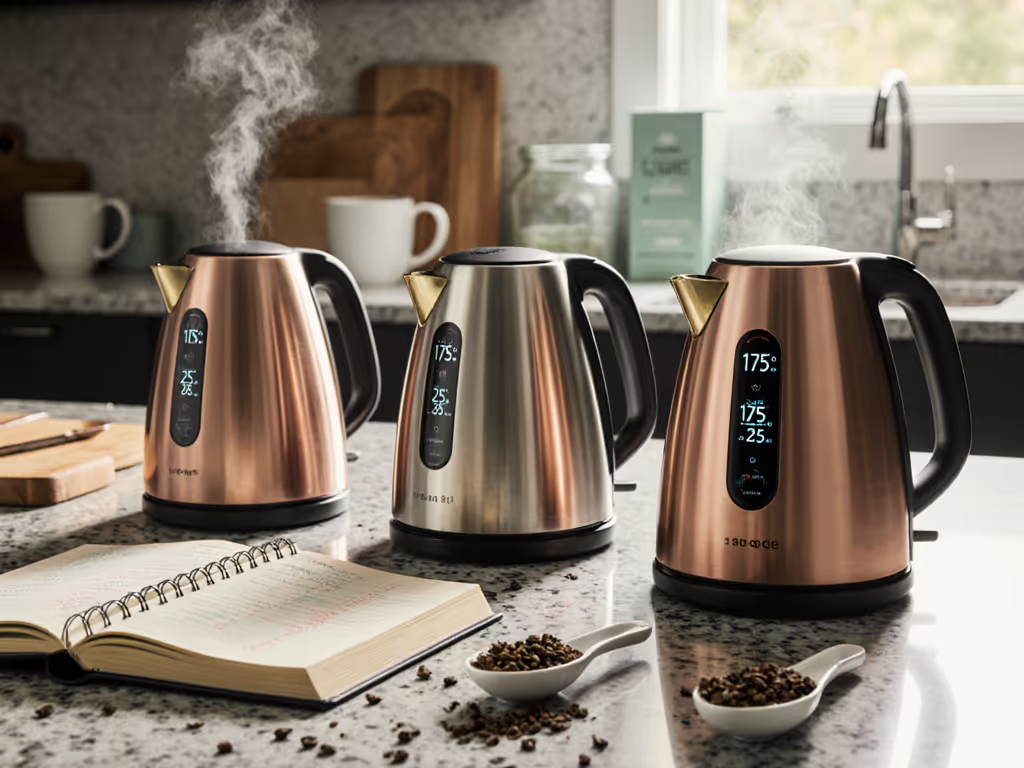
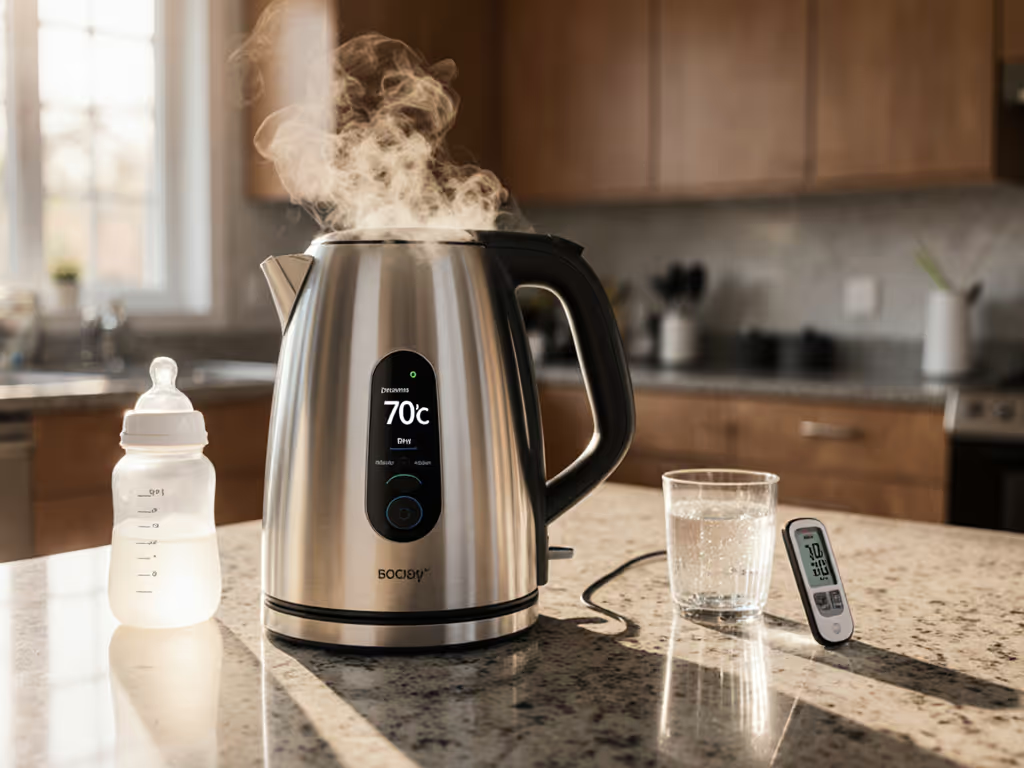
- If you're serious about green tea or delicate brews, a variable-temperature kettle lets you hit precise targets (70-80°C for green tea, for example), which matters far more than material alone.
What to Explore Next
If water chemistry is your focus, consider investigating your local water hardness (your municipality provides reports, or home test kits are inexpensive). Hard water? Descaling becomes non-negotiable, and concealed heating elements become worth the investment. Brewing coffee or tea daily? Keep a checklist: water type, kettle material, descaling schedule, and target temperature. These four variables, tracked over a week, reveal which kettle design actually supports your routine. The goal isn't perfection: it's repetition. When your gear supports habit, precision stops feeling like work and starts feeling like flow.
Related Articles