How Kettle Temperature Sensors Work: Accuracy & Overshoot
By Ava Osei • 19th Feb
Kettle temperature sensor technology relies on two main approaches (bimetallic strips and electronic thermistors), each with different precision, response time, and behavior during heating and cooling cycles. Understanding these systems reveals why your kettle may overshoot its target, how placement affects accuracy, and what repeatability really means in practice.
How Kettles Measure Temperature: Two Core Systems
The Bimetallic Strip: The Traditional Standard
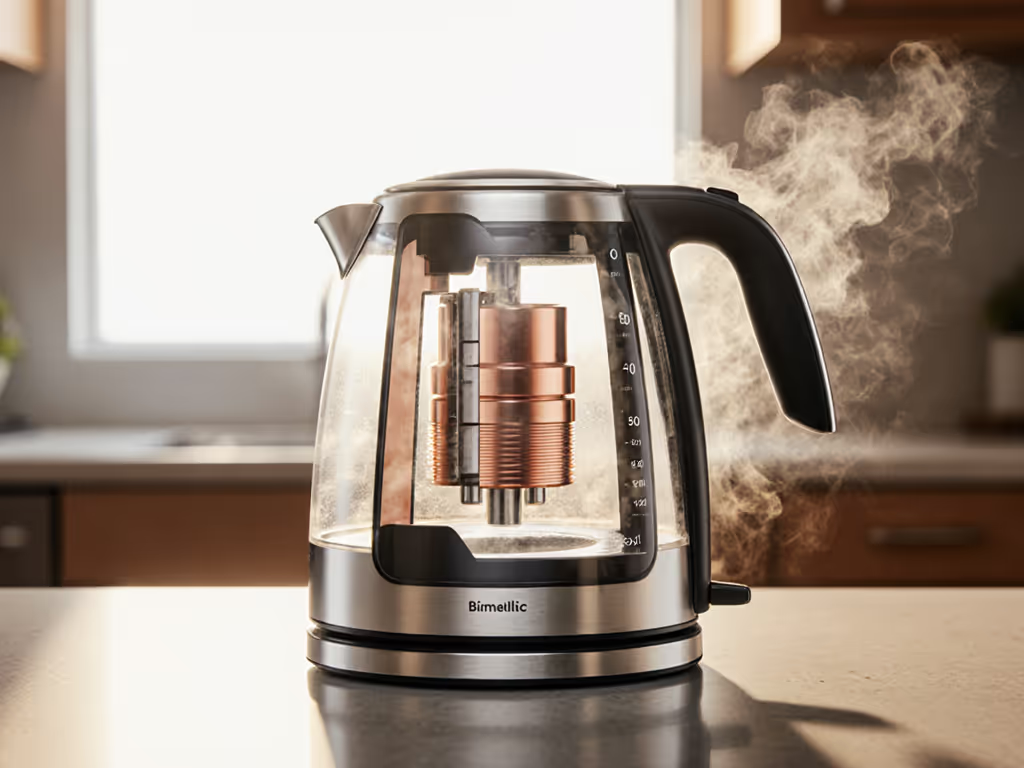
A bimetallic strip is a simple but elegant device made from two metals bonded together, each with a different rate of thermal expansion[1]. When heat rises, one metal expands faster than the other, causing the strip to bend. This mechanical deformation triggers or breaks an electrical contact, cutting power to the heating element[1].
In a conventional kettle, the bimetallic strip sits near the steam vent or under the heating disc. When steam reaches sufficient volume (around 100°C at sea level), it deforms the strip sharply, flipping the switch to "off" with a satisfying click[1]. The elegance of this system lies in its simplicity: no electronics, no calibration, no power drain on the sensor itself. For a deeper dive into kettle internals and safety mechanisms, see how electric kettles work.
The trade-off? A bimetallic strip operates like a light switch (on or off) at a single, fixed temperature point[1]. It cannot fine-tune to 75°C or hold 80°C steady. Once triggered, it stays off until the kettle cools enough for the strip to relax and the switch to reset.
Electronic Thermistors: Precision and Control
Modern variable-temperature kettles use thermistors, tiny electronic resistors that change resistance dramatically as temperature shifts[2]. Two common types are NTC (Negative Temperature Coefficient), where resistance decreases as heat rises, and PTC (Positive Temperature Coefficient), where it increases[3].
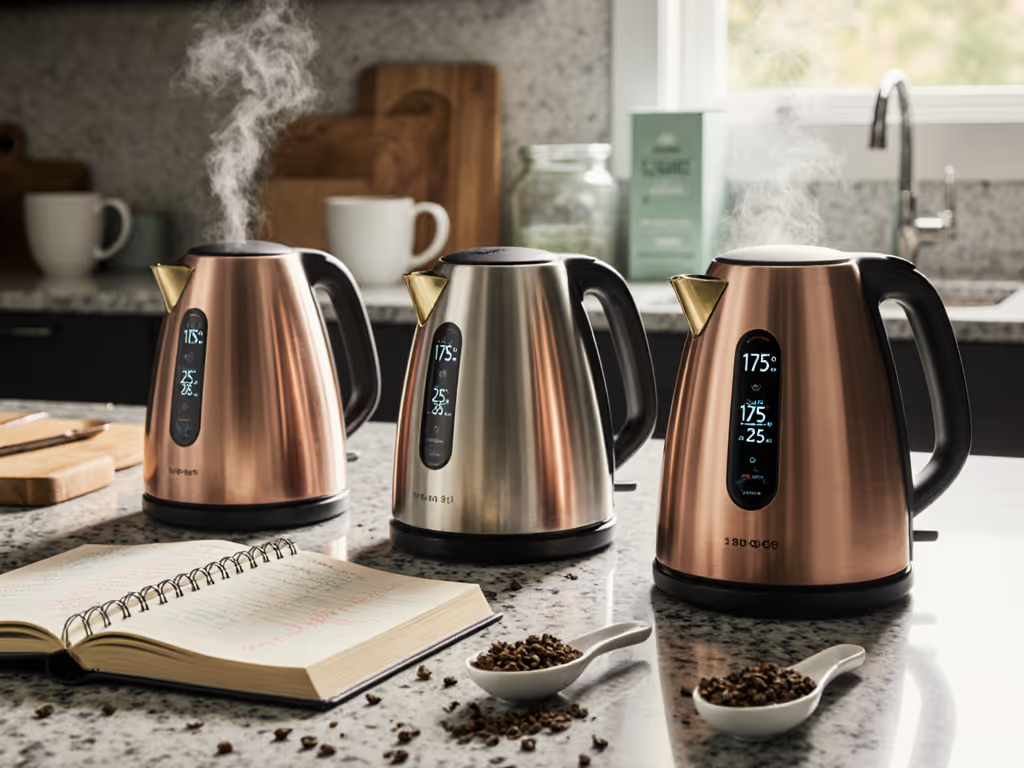
Inside a smart kettle, a thermistor constantly feeds temperature data to a microcontroller. The control unit compares actual water temperature to your target (say, 80°C for green tea) and adjusts power delivery to the heating element in real time[2]. This is why such kettles can hold a specific temperature far longer and with much tighter tolerance than a simple on/off system.
Electronic sensors are also faster and more granular. Instead of waiting for steam to gather, a thermistor detects subtle temperature changes across a wide range and can integrate the rate of temperature rise into its decision logic, improving precision[2].
Why Kettles Overshoot: The Engineering Reality
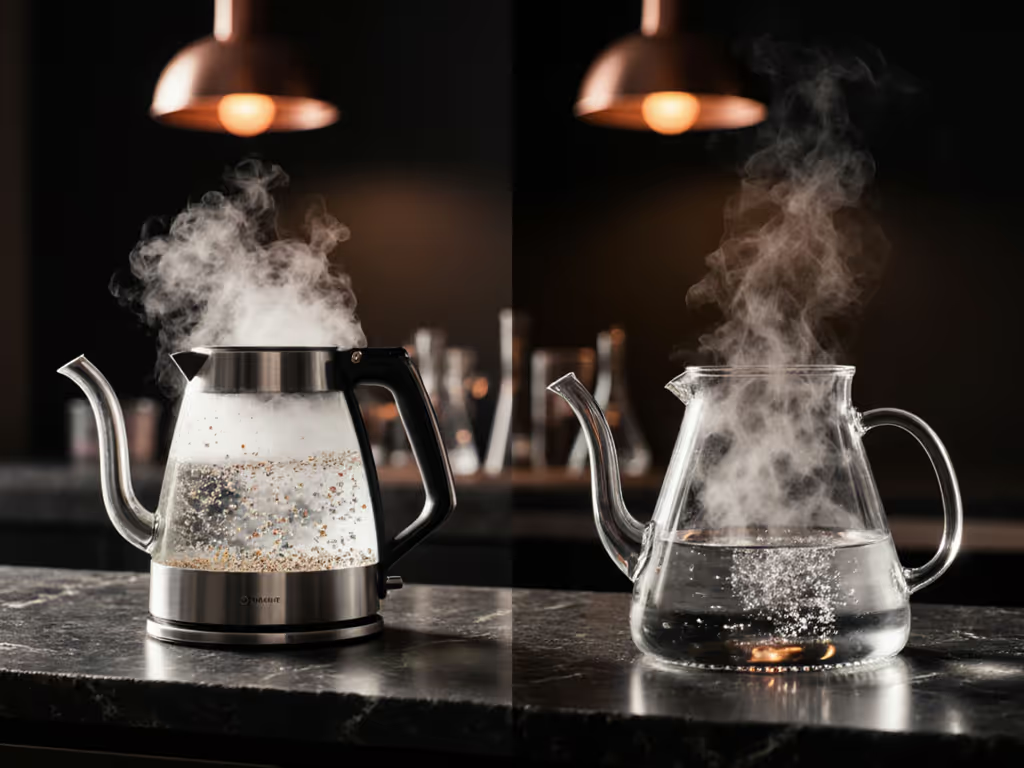
Thermal overshoot occurs because heat energy cannot stop instantly; it continues transferring from the element to the water even after power cuts off.
Imagine a kettle set to 80°C for delicate oolong tea. The heating element delivers steady power, and the thermistor reads 78°C, 79°C, 79.5°C. The moment it hits 80°C, the microcontroller shuts off power[2]. But here's the catch: the heating element itself is still hot. That residual heat radiates into the water around it for another second or two, pushing temperature to 82°C or even 85°C before the element cools enough to stop contributing[1].
This overshoot is especially pronounced with:
- High-wattage elements (faster heat delivery = more residual energy)
- Poor sensor placement far from the heating element (delayed feedback)
- Kettles without a "hysteresis band" (a deliberate cool-down buffer that re-engages heat only if temp drops 2-3°C below target)
Water's high thermal mass also works against precision. It takes time for heat to distribute evenly, so a sensor reading one spot may miss hot pockets forming near the element[2].
Sensor Placement: Why Location Matters
A thermistor placed directly above the heating element responds fastest but may "see" false spikes of super-heated water. A sensor mounted midway up the kettle wall responds slower but reads more representative bulk temperature[2]. The ideal compromise is a well-insulated sensor near the center of the water column, close enough for quick feedback, far enough to avoid false readings.
This is why high-end kettles invest in sensor design. A poorly placed sensor will cause:
- Overshoot (sensor reads target before heating truly stops)
- Undershoot (sensor lags, water cools below target before element restarts)
- Oscillation (the kettle swings ±3-5°C above and below setpoint, cycling on and off)
Consistency in brewing (one of the cornerstones of repeatability) depends partly on the kettle itself staying stable. I once watched a friend struggle with bitter green tea no matter the brand. We ditched the standard kettle and switched to a variable-temperature model with careful sensor placement. We set it to precisely 80°C, poured gently, and timed the steep. Their next cup tasted completely different. The ritual didn't become rigid; it became reliable, cup after cup, the flavor stayed true. Small changes, big flavor.
Calibration and Repeatability: Can Sensors Drift?
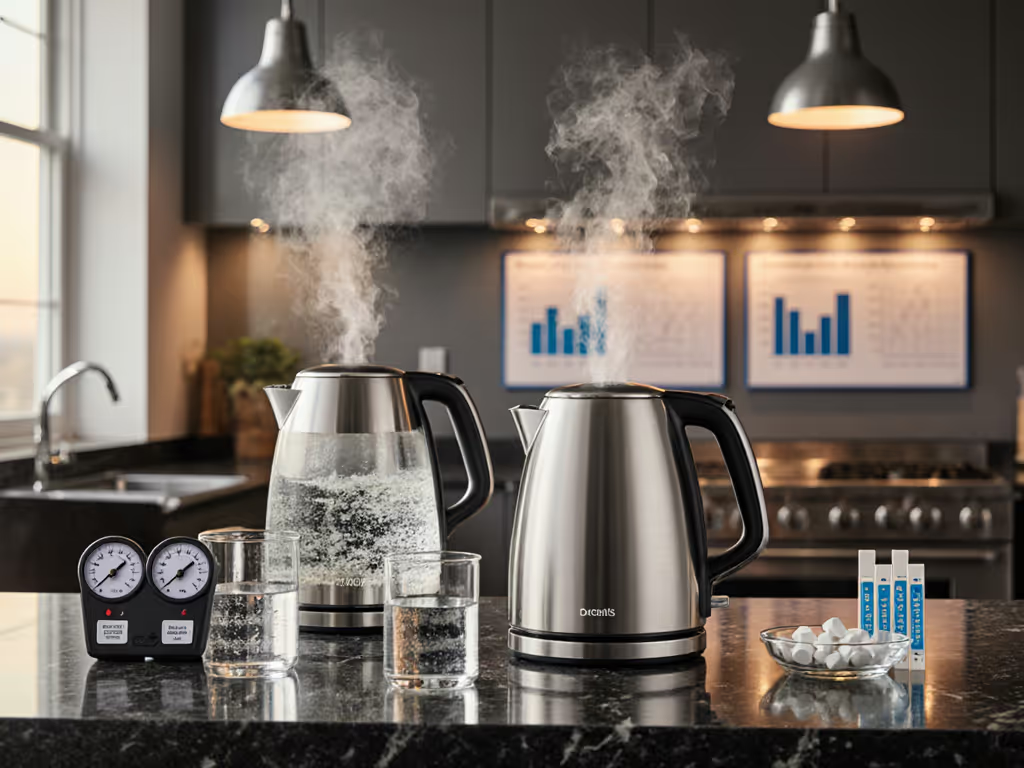
Thermistors and bimetallic strips can drift over time, especially in hard-water regions where mineral buildup insulates the sensor and distorts its response[2]. For the physics behind how mineral content skews readings, see how water minerals alter kettle temperature accuracy. A kettle calibrated perfectly on day one might read 2-3°C high after two years of accumulated scale.
Here's a practical checklist to maintain accuracy:
- Descale every 30–60 days if you have hard water; check your kettle's descaling schedule first
- Use distilled or filtered water when possible to slow mineral buildup
- Keep the sensor area clear during cleaning; never scrape or force anything near internal components
- If supported, use the kettle's auto-calibration feature (some modern models allow a 100°C reference point)
A kettle that drifts slowly is actually common and acceptable, and most commercial designs tolerate ±2-3°C variance before it impacts flavor perception in coffee or tea[1][2]. Detailed descaling and upkeep steps are in our electric kettle cleaning guide. But if you notice dramatic shifts (kettle now boils at 95°C or overshoots to 95°C when set to 80°C), the sensor may need replacement or the element may be failing.
Practical Implications: What This Means for Your Brew
For pour-over coffee, a 2°C overshoot rarely matters; coffee is forgiving between 90–96°C. For green or white tea, even 5°C too hot can cause bitterness, so a kettle with tight overshoot control (±1-2°C) or a built-in hysteresis band is worth seeking out[1][2].
Variable-temperature kettles with keep-warm modes use their thermistor feedback loop to hold water at a target for 30–60 minutes. This requires constant small power adjustments (power on at 79°C, off at 81°C, on again at 78°C), cycling invisibly to maintain the band[2]. Simple on/off kettles cannot do this; they cool off between boils.
This engineering also explains why some kettles are noisier or have longer heat times: they may sacrifice overshoot precision for speed, or prioritize energy efficiency (slower ramp = less overshoot but also slower brew prep).
How to Evaluate a Kettle's Sensor System
When shopping or troubleshooting, ask or test:
- Sensor type: Does the spec sheet mention bimetallic, thermistor, or PTC? Thermistors are more precise for gourmet brewing.
- Temperature range and step size: Can it hold 60°C? 75°C? Or only preset bands (60, 70, 80, 90, 100)? Finer steps mean better control.
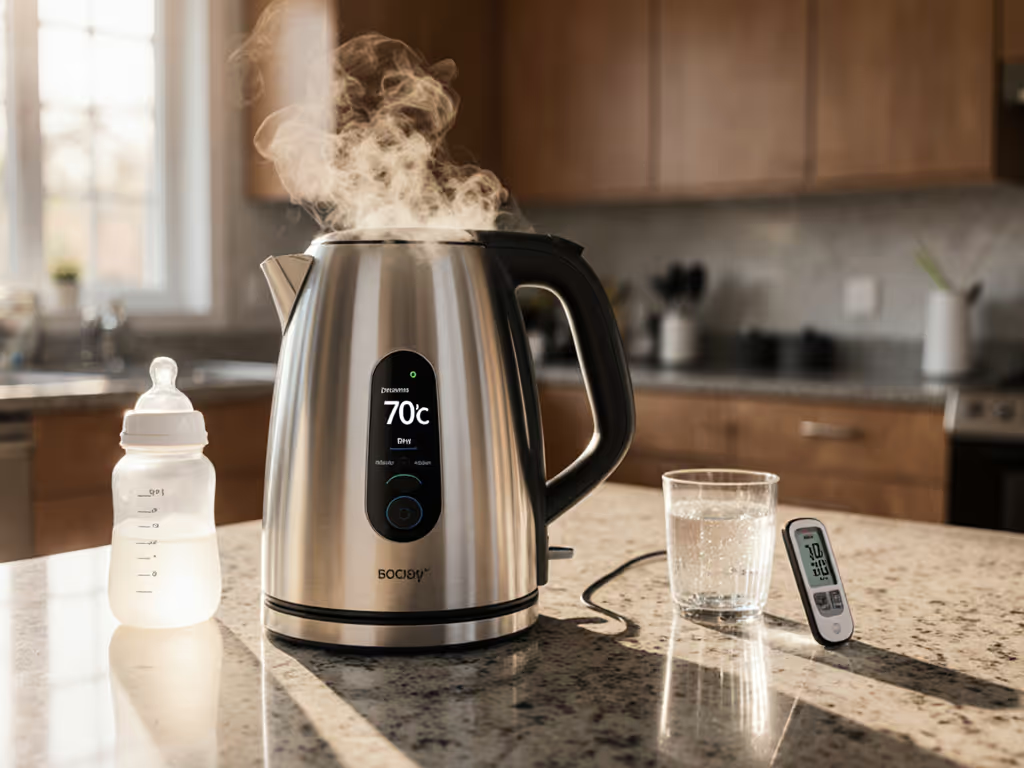
- Overshoot tolerance: Pour water into a mug at your target temp and measure with a kitchen thermometer after 10 seconds. Is it ±1°C or ±5°C?
- Response time: Time how long it takes to reheat from cool to setpoint. Faster often means higher overshoot risk; slower is more stable.
- Hysteresis bandwidth: If the kettle spec mentions a 2-3°C band, overshoot is managed intentionally and repeatably.
- Sensor maintenance: Is the thermistor replaceable? Some kettles make it simple; others require full disassembly.
Precision is a habit, not an advanced setting. The right kettle makes consistency automatic and forgiving; the wrong one punishes you every morning.
Further Exploration
If you're curious about sensor drift and long-term calibration, look into how brewing labs validate kettles over 500+ heat cycles. See our variable temperature kettle accuracy tests for methodology and ranked results. Industry testing often measures temperature stability during the entire pour window, not just at the moment of shutoff, revealing which designs truly deliver repeatability. The science of water's thermal properties, mineral precipitation on sensors, and element aging also intersects here, and studying those topics deepens your understanding of why some kettles "just work" while others frustrate after six months. Consider also researching the differences between open (non-contact) sensor designs and direct-immersion alternatives; placement philosophy has a profound effect on real-world accuracy.
Related Articles