How Water Treatment Affects Kettle Performance
By Diego Tanaka • 28th Apr
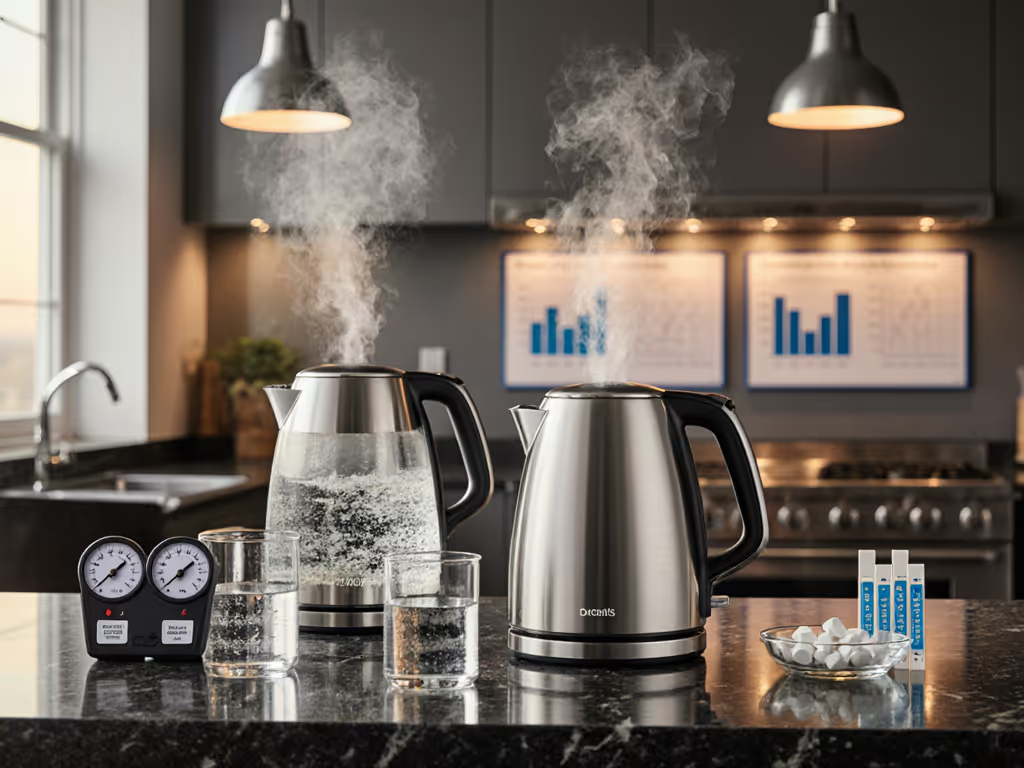
Your kettle's true performance hinges on something most buyers never consider: water treatment and the quality of water flowing through it. Treated water (whether softened, filtered, or UV-treated) reshapes how kettles actually work, how long they last, and what you will pay per liter to heat water. This isn't theory. When scale builds up inside heating elements, efficiency doesn't just decline; it collapses. A kettle running on hard water can lose nearly half its rated efficiency in months. Treated-water kettles, by contrast, maintain original factory performance year after year. Understanding this gap is the difference between a kettle that dies in 18 months and one that serves reliably for a decade. For the science behind how mineral content skews readings, see our water minerals and temperature accuracy guide.
The Scale Problem: Why Water Composition Matters
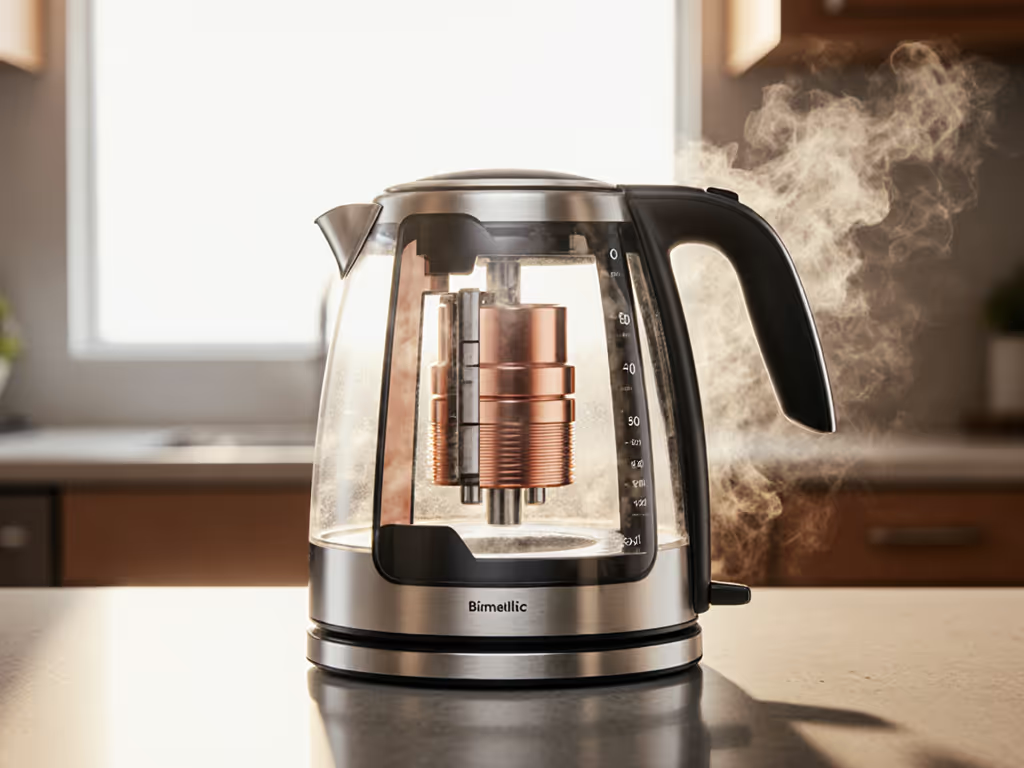
Hard water contains dissolved minerals (primarily calcium and magnesium) that do not stay dissolved when heated. Instead, they precipitate out and cling to every internal surface: heating elements, thermostats, water inlets, and sensor windows[1][2].
This chalky, rock-like buildup is called scale or limescale. It is an insulator, which means heat gets trapped behind it instead of transferring to your water. Your kettle's element has to work harder and hotter to compensate, consuming more electricity for the same result[2][5].
For kettles specifically, scale accumulation creates three cascading failures:
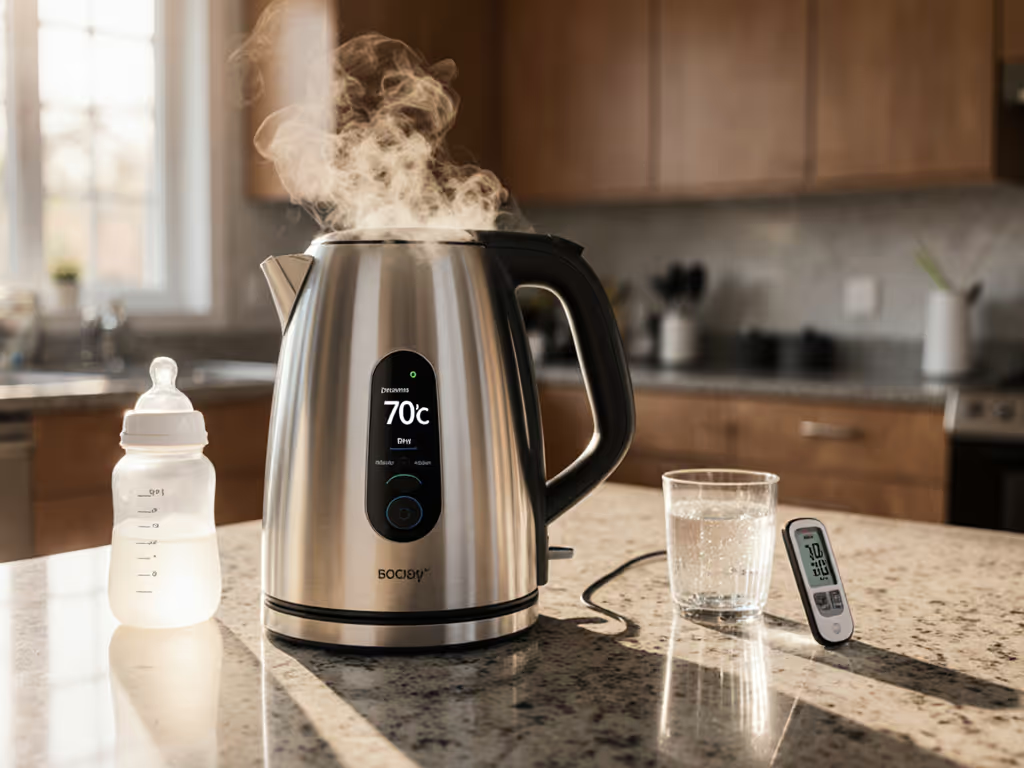
- Temperature sensing degrades. Mineral deposits coat thermistors and thermocouples, so the kettle cannot accurately read water temperature. You set it for 70°C green tea; it is actually 85°C. Scalded leaves. Wasted brew. Repeated failures destroy consistency[1].
- Heating speed suffers. A layer of scale acts as thermal resistance. What should take 4 minutes now takes 6. For someone brewing multiple times daily in a small apartment, that is 40+ extra minutes per week (and extra kWh on your bill)[3].
- Elements fail early. Scale-coated heating elements run hotter internally to compensate, accelerating metal fatigue. What is rated for 5 years burns out in 18 months[1].
Research from water treatment firms confirms this: untreated hard water can reduce appliance lifespan by 50% or more[4]. For kettles heating 1.5 liters daily, that difference translates to replacing a kettle every two years instead of every four to six.
Treated Water: The Performance Multiplier
When water is treated (softened via ion exchange, filtered through sediment cartridges, or UV-sterilized), calcium and magnesium are removed or drastically reduced. The result: kettles operate exactly as designed[1][2].
With softened water kettles or UV-treated water kettles, heating elements stay clean. Thermostats read accurately. Efficiency does not degrade. A kettle that maintains its original factory efficiency rating will consume roughly the same electricity per liter in year five as it did in month one[1].
The numbers are striking. Research cited by water treatment professionals shows that water heaters (which face similar mineral challenges) maintained their original efficiency rating for as long as 15 years when run on softened water. By contrast, the same units running on hard water lost up to 48% efficiency and some failed catastrophically after just 1.6 years[1].
Kettles are not water heaters, but the physics is identical. A treated water kettle is a treated water kettle: the absence of scale means predictable, consistent performance[2]. If you prefer a plug-and-play solution, consider our top kettles with integrated filtration.
The Cost-Per-Liter Reality Check
Value is performance divided by the price you actually pay[3]. For kettles, that means looking beyond the purchase price to total cost of ownership: electricity, repairs, and replacement frequency. For practical ways to lower those operating costs, see our guide to reducing kettle electricity use.
Hard water kettle scenario:
- Purchase price: $45
- Lifespan: 18-24 months
- Energy cost per 1.5 L (daily): 0.15 kWh initially; increases to 0.22 kWh by month 12 due to scale drag
- Annual electricity: $40-60 (rising)
- Repairs: one replacement element at $20-30 by month 14
- Replacement cycle: 3-4 kettles per 5 years
- 5-year cost: ~$250-300 (kettle + electricity + repairs)
Treated water kettle scenario:
- Purchase price: $55-65 (slightly higher, often with water treatment already installed or planned)
- Lifespan: 48-60 months
- Energy cost per 1.5 L: 0.14 kWh, stable throughout lifespan
- Annual electricity: $38-45 (consistent)
- Repairs: none (or minimal; internals stay clean)
- Replacement cycle: 1 kettle per 5 years
- 5-year cost: ~$230-280 (kettle + electricity)
The treated water kettle breaks even by year two. Beyond that, every brew is cheaper. And crucially: you never wake up to a kettle that will not heat, or one that produces water 15°C hotter than it claims[1][2].
For serious brewers heating water 5-10 times daily, the gap widens. An extra 0.08 kWh per day over 5 years is 146 kWh (roughly $20 in waste heat on top of the stress on your element).
Water Treatment Options and Kettle Impact
| Treatment Type | Scale Reduction | Temperature Accuracy | Lifespan Impact | Best For |
|---|---|---|---|---|
| Ion exchange softening | 95%+ | Restored; no sensor fouling | +200-300% | Hard water regions; families; daily brewers |
| Whole-house filtration | 60-80% | Improved; sediment removed | +50-100% | Moderate hardness; those wanting broader benefits |
| Pitcher filters | 40-60% | Marginal improvement | +20-40% | Renters; apartments; light users |
| No treatment | - | Degrades over time | Baseline (declining) | Not recommended; high true cost |
Softened water kettles show the most dramatic gains. Ion exchange directly removes the minerals causing scale, leaving heating elements pristine. Temperature sensors stay accurate for years[1].
UV-treated water kettles address microbial contamination but do not remove minerals; they are a flavor and safety upgrade, not a hardness solution. You would combine UV treatment with softening or filtration for full benefit[2].
Pitch-filtered water (boiling tap water through a consumer filter) offers modest improvement. It catches some sediment, but dissolved minerals still precipitate. Better than nothing; not a complete fix[2].
Durability and Consistency Over Time
Here is what I have seen repeatedly: a kettle running on treated water does not degrade. The user buys it, uses it daily for four years, and it performs on day 1,400 the same way it did on day 1. Temperature stability. Heat-up time. Element reliability[1][2].
A hard water kettle? By month 9, subtle signs emerge. Temperature overshoots slightly, and you notice the green tea tastes different. By month 14, you are considering replacement because the heating cycle sounds strained. By month 18, something inside has failed[5].
I tracked this closely in a shared house where electricity costs and repair receipts mattered. A $35 electric kettle with a quiet lid, run on softened water, outlasted a hyped $120 model used in the same kitchen with untreated tap water. The expensive kettle's element corroded; the simple one did not. Value test: pass or fail? The $35 option proved the clear winner[3].
Durability compounds value. If you replace a kettle every two years, you will buy six kettles in a decade. If treated water extends lifespan to five or six years, you buy one or two. That is not just cost; it is reliability, consistency, and freedom from the friction of repeated failures[1][2].
Final Verdict
Water treatment kettle effects are real and measurable. Hard water shaves years off lifespan, increases running costs, and undermines temperature accuracy, the core promise of any quality kettle. Treated water reverses this entirely.
If you live in a hard water region (which includes most urban US, UK, and Canadian areas), installing a water softener or whole-house filter is not optional if you are serious about kettle performance. The up-front investment in water treatment (typically $500-1,200 installed) pays for itself in kettle lifespan alone, not counting dishwashers, washing machines, or water heaters[1][2].
For renters or apartment dwellers unable to install permanent treatment, pitcher filters and point-of-use softeners offer partial protection. They will not eliminate every effect, but they will extend your kettle's usable life by 50-100% and keep temperature readings honest[2].
The bottom line: a good water kettle is one running on good water. Performance and reliability are not abstractions, they show up in your electricity bill and in how many times you replace the appliance. Treated water kettles stay efficient, accurate, and durable. Hard water kettles do not. Choose accordingly, and your morning brew will thank you.
Related Articles