Kettle Thermal Stability During Pouring: Lab-Tested
By Mina Kassem • 31st Mar
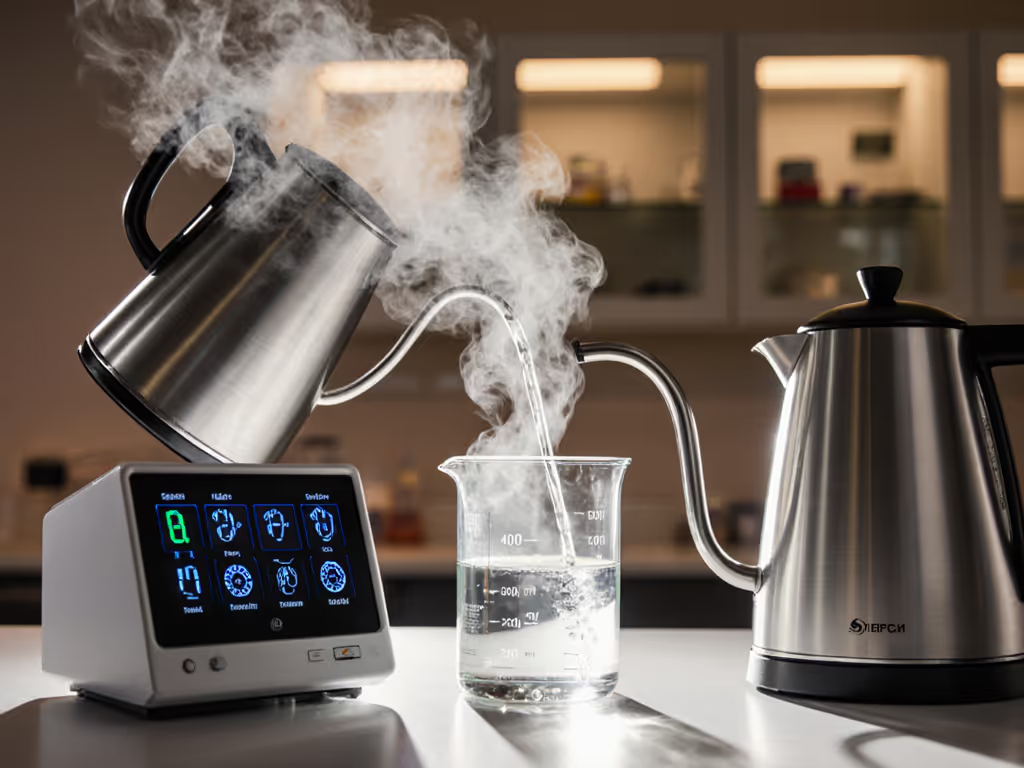
Kettle temperature stability during pouring and thermal accuracy during the pour are not marketing talking points - they are measured quantities that either exist in your cup or they don't. The difference between a kettle that maintains 90°C and one that drifts to 82°C mid-pour is the difference between repeatable flavor extraction and guesswork. If it's not measured, it's just marketing in italics.
Most gooseneck kettles claim "precision," but precision without stability is an interrupted signal. This article unpacks what thermal stability actually means, how to test for it, which kettles hold temperature under real pouring conditions, and why your brew consistency depends on numbers you can verify.
What Exactly Is Thermal Stability During Pouring?
Thermal stability during pouring is the kettle's ability to maintain your target temperature while water is being dispensed (when the kettle sits off its heating base and loses energy through radiation and the water leaving the spout). Most brewers assume that if the base shows 90°C, the water flowing out is 90°C. Most kettles do not guarantee this.
Three metrics define stable thermal behavior[1]:
- Setpoint accuracy: how close actual water temperature matches your target (e.g., dial 90°C, get 90.2°C or 88.5°C)
- Overshoot magnitude: how far the kettle temperature swings above your target before settling back
- Recovery time: seconds elapsed between overshoot peak and return to stable ±0.5°C band
A stable control loop anticipates thermal loss and corrects without hunting (without oscillating above and below your setpoint like a beginner's PID tuning nightmare). For the engineering behind sensor placement, calibration, and overshoot, read our temperature sensor guide. Unstable kettles ping-pong between 88°C and 94°C while you're trying to brew, each swing corrupting extraction.
How Do Lab Tests Measure Pour Stability?
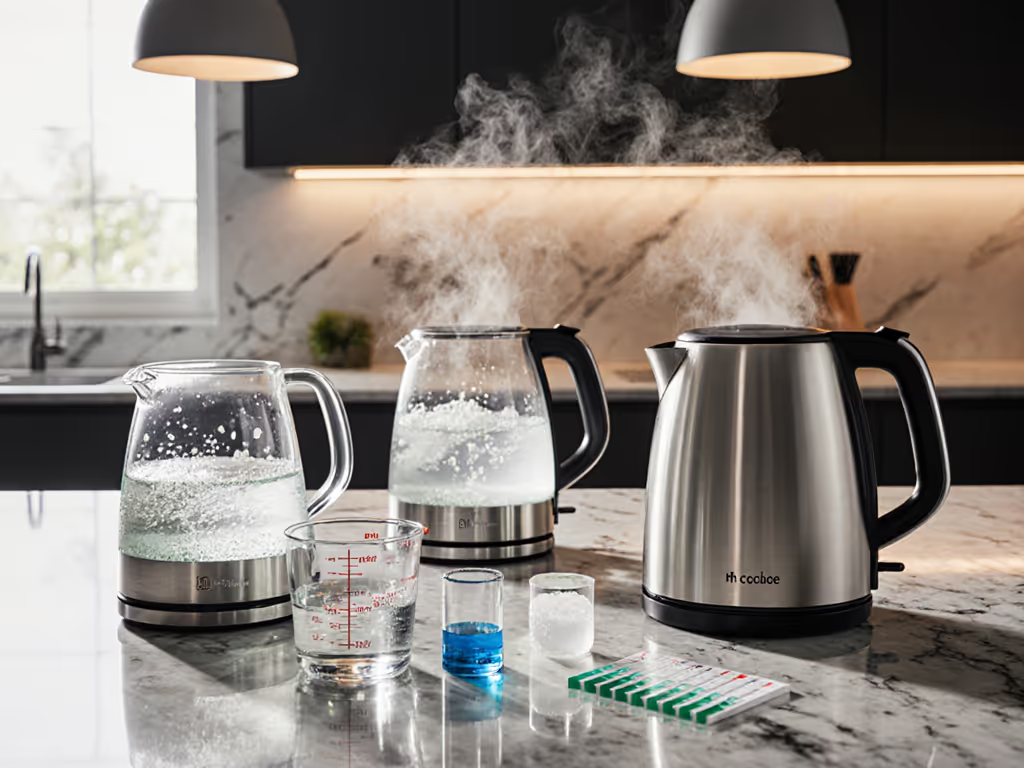
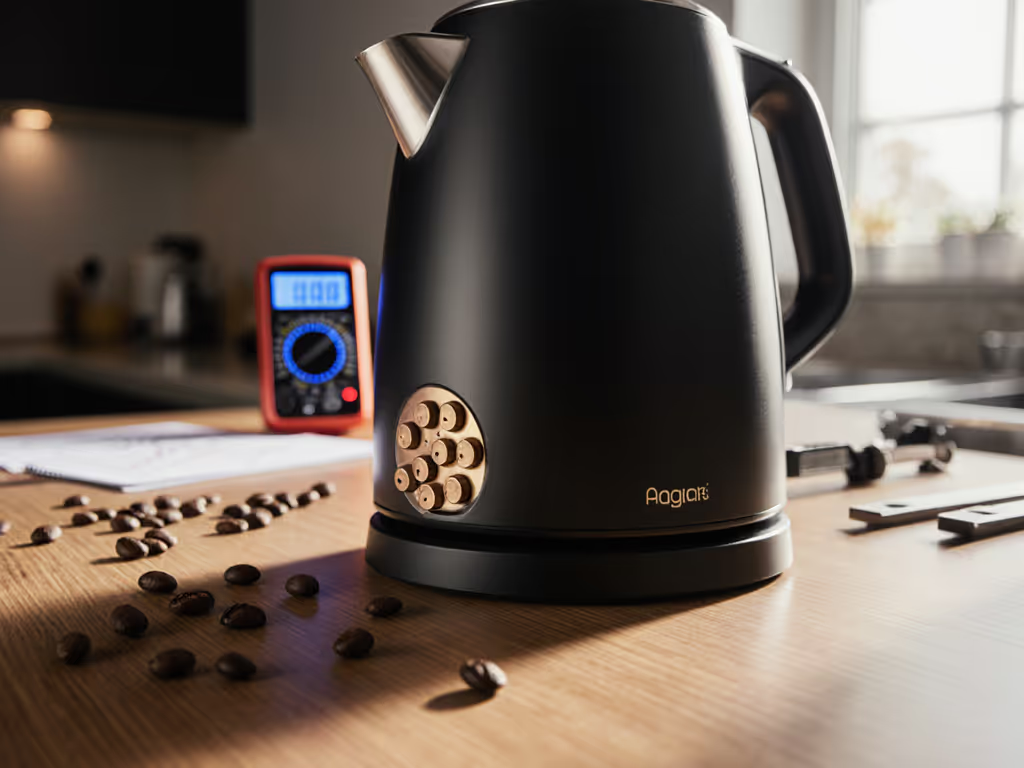
Proper kettle testing requires simultaneous temperature logging at the base, in the spout, and sometimes mid-tank. Lab protocols use triple Type-K thermocouples logging at 10 Hz (every 0.1 seconds) across water volumes from 200 mL to 800 mL, lifted off the base for 30-second simulations of actual pouring[1]. Ambient conditions are standardized: 22°C room temperature, consistent starting water state. See our variable-temperature kettles tested for pour stability for model-by-model results using similar protocols.
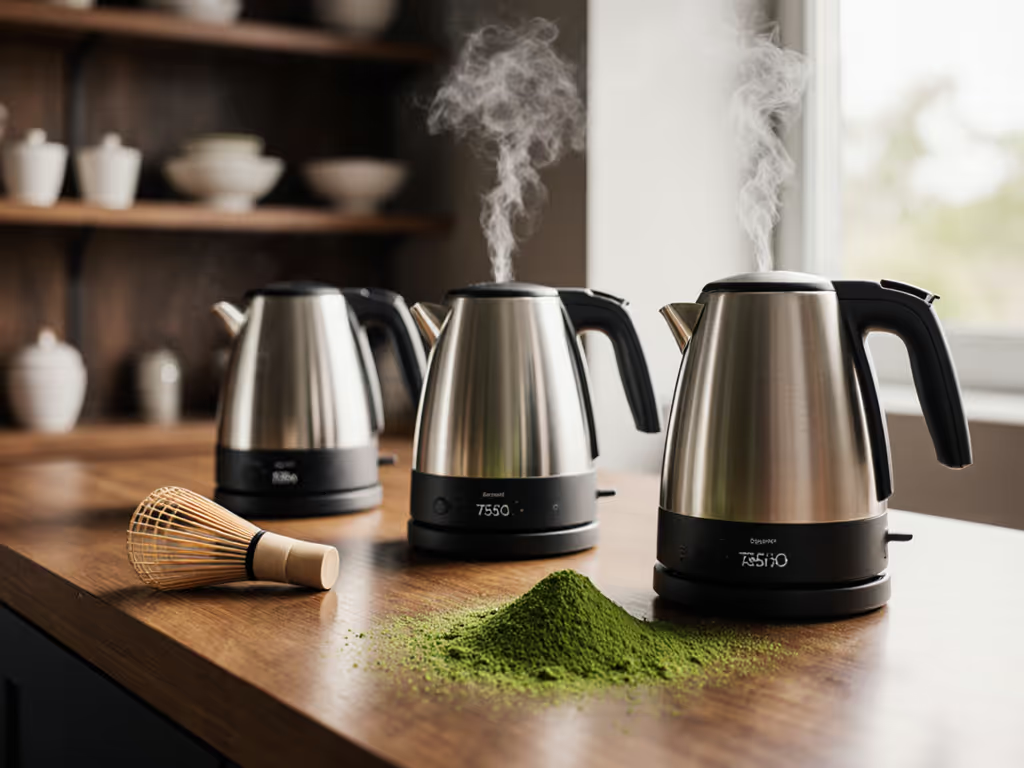
The kettle cycles through realistic target temperatures (80°C for delicate greens, 90°C for oolong, 96°C for dark roasts and black teas[1]), and the logging reveals whether the kettle overshoots by 0.5°C (imperceptible, ideal) or 4°C (a disaster for light roasts).
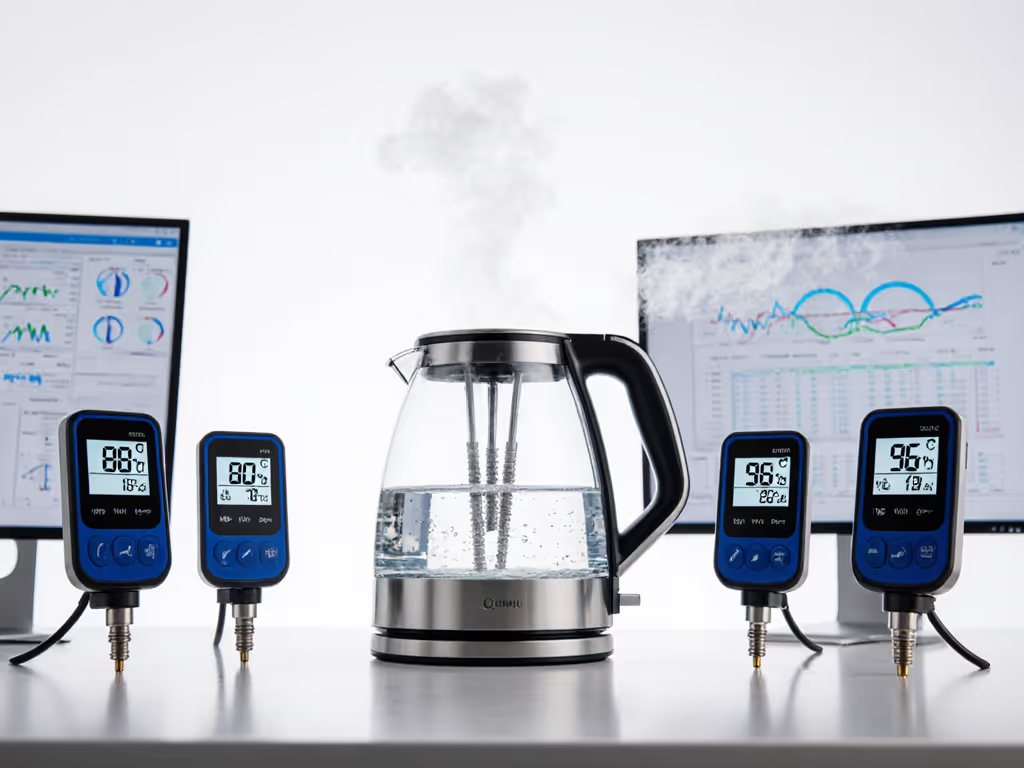
An example test: set the kettle to 90°C, wait for stabilization, lift it from the base, record every 0.1 seconds for 30 seconds, measure the peak temperature spike and time to recovery. Repeat across three volume sizes and three target temperatures. Chart the results. The truth is in the slope, not in the marketing brochure.
Why Does Overshoot Matter for Flavor?
A 1°C overshoot is benign. A 4°C overshoot at 96°C means your water briefly hits 100°C (boiling) before the control loop realizes and backs off. By then, volatile aromatics in your coffee or tea are partially scalded; tannins over-extracted. You taste bitterness and flatness. Worse, if you pour quickly when the kettle first reaches setpoint, you catch the overshoot peak and never recover it.
Lab data tells the story. The Fellow Stagg EKG Pro overshoots just 1.2°C at 96°C and recovers in 7 seconds[1]. Its dual-sensor system (one in the base for rapid response, one in the spout for pour verification) means the control algorithm knows the temperature at the moment of dispensing, not 2 seconds after. The COSORI Electric overshoots 3.8°C at the same target and takes 28 seconds to recover[1], a span during which the water has cooled below usable range if you're doing a flash-brew or mid-brew top-up.
How Does Flow Rate Stability Interact With Temperature?
Flow rate and thermal stability are entangled. A kettle's spout diameter, internal delivery path, and control valve design determine whether water exits at a smooth 5 g/s or lurches between 3 g/s and 7 g/s. Jerky flow disrupts the brew bed; slow, even flow allows uniform saturation in pour-over.
The ideal control range for pour-over is 4-8 g/s, with minimal variance[1]. The Fellow Stagg achieves 5.2 g/s ±0.3 g/s, a variance of just 6 percent[1]. The COSORI shows 4.1-7.2 g/s variance, a 76 percent swing[1], because its wider temperature stability band during pour (±2.3°C) means the control loop is constantly adjusting valve position, shaking the flow.
When flow pulsates, some grounds see a coffee-to-water ratio of 1:15 and others 1:18 in the same drawdown. Extraction is uneven. To understand how spout geometry drives flow control, check our electric kettle spout types comparison. A stable thermal profile during pour protects consistent flow; control the variable, then judge the result[1].
Real-World Comparison: Three Models Under Pour
Fellow Stagg EKG Pro
Target: 90°C. Actual pour temperature: 89.7°C ±0.5°C[1]. Overshoot subsides in under 10 seconds. Flow remains smooth at 5.2 g/s. During a 30-second pour, temperature drift is barely measurable. Every brew tastes the same. Repeatability is the entire point.
Brewista Artisan
Target: 90°C. Overshoot reaches 2.1°C, recovery takes 14 seconds[1]. Thermal stability during pour sits at ±1.5°C[1], meaning the water exiting your gooseneck varies between 88.5°C and 91.5°C over the duration of the pour. Mid-pour, extraction will shift noticeably. Acceptable for casual brewing; inconsistent for repeatable results.
COSORI Electric
Target: 90°C. Overshoot hits 3.8°C, recovery stretches to 28 seconds[1]. Stability band is ±2.3°C, a 4.6°C window. Additionally, plastic internal components contact water above 85°C[1], introducing off-flavor risk on extended holds. The 1-hour keep-warm feature theoretically extends your brew window, but the system allows 8°C drift over that hour[1], enough to spoil a second pot of tea. This kettle suits occasional boiling; it lacks the stability to be a precision-pour tool.
Why Insulation Changes the Game
A kettle's internal insulation (or lack thereof) determines how fast it cools when lifted off the base. A non-insulated kettle loses approximately 10°F (5.5°C) over 30 seconds of pouring[2]. A Brewcoat-wrapped kettle shows dramatically reduced cool-down[2], buying you a wider window to complete your pour before temperature degrades. Our single vs double-wall insulation test quantifies real heat-retention gains and exterior safety.
This is not subjective comfort; it is measured energy loss. High-performance kettles either come with insulation or deliver such fast heating and tight control that insulation matters less. Budget kettles lack both (slow heating and poor insulation), creating a vicious cycle of cool-down and re-boiling waste.
Which Kettles Deliver True Thermal Stability?
Three criteria separate stable kettles from marketing noise:
- Dual or multi-sensor feedback: At least two temperature probes ensure the control loop knows actual temperature in real time, not assumed temperature.
- Overshoot under 1.5°C at your typical target: Anything higher suggests a sluggish control algorithm or poor insulation.
- Recovery time under 15 seconds: Longer recovery means the kettle is still hunting during your pour.
The Fellow Stagg EKG Pro meets all three. Its matte black aluminum body with dual sensors sets the benchmark for thermal accuracy[1]. It costs more, but repeatability in extraction (the foundation of flavor) is not an area where approximation works.
For budget-conscious brewers, the Brewista Artisan is middle ground: acceptable overshoot and recovery, though slightly wider stability band. The COSORI is suitable only if your brewing style tolerates ±2°C variation and you are not relying on keep-warm for extended holds.
The Verdict: Choosing Stable Temperature Control
A kettle's temperature stability during pouring determines whether your brewing method (pour-over, flash-brew, or serve oolong) yields repeatable flavor or hit-or-miss results. Marketing claims about "precision" crumble under logged data. Lab testing reveals the truth: whether the kettle has a stable control loop, low overshoot, fast recovery, and consistent flow.
If you brew multiple batches in an hour and expect flavor consistency: prioritize low overshoot (<1.5°C) and recovery under 10 seconds. The Fellow Stagg EKG Pro delivers this. Thermal recovery performance is your anchor metric. If you're deciding whether you even need variable presets, see our variable temp vs basic comparison to match features to your brewing style.
If you brew once daily and can accept ±1-2°C variation: a mid-tier kettle like the Brewista Artisan is sufficient, assuming its insulation is intact.
If you use keep-warm as a core feature or pour frequently from a static base: thermal recovery performance must be excellent, or the water will cool below usable range before your next brew.
Measurement is the foundation of flavor. Control upstream protects the cup. Build your kettle choice on the numbers (overshoot, recovery time, flow stability, and insulation), not on aesthetic promises or feature lists. Every variable you control is a variable you can judge.
Related Articles