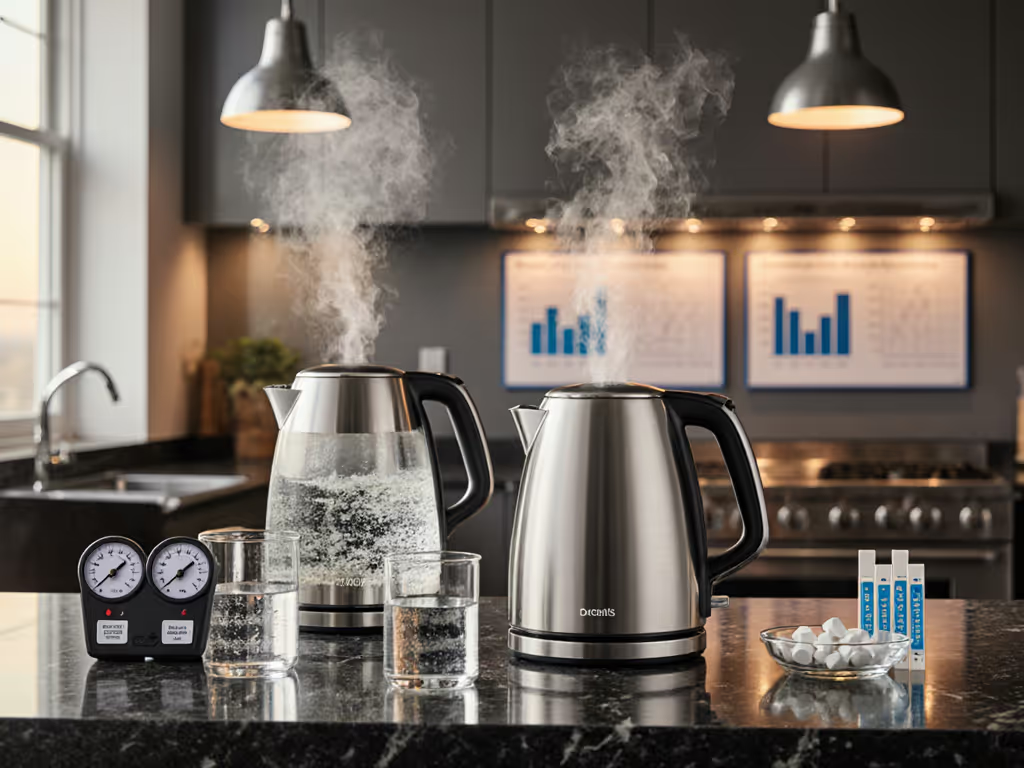
Kettle Shape Science: Heat, Retention, And Pour Control
By Ava Osei • 29th May
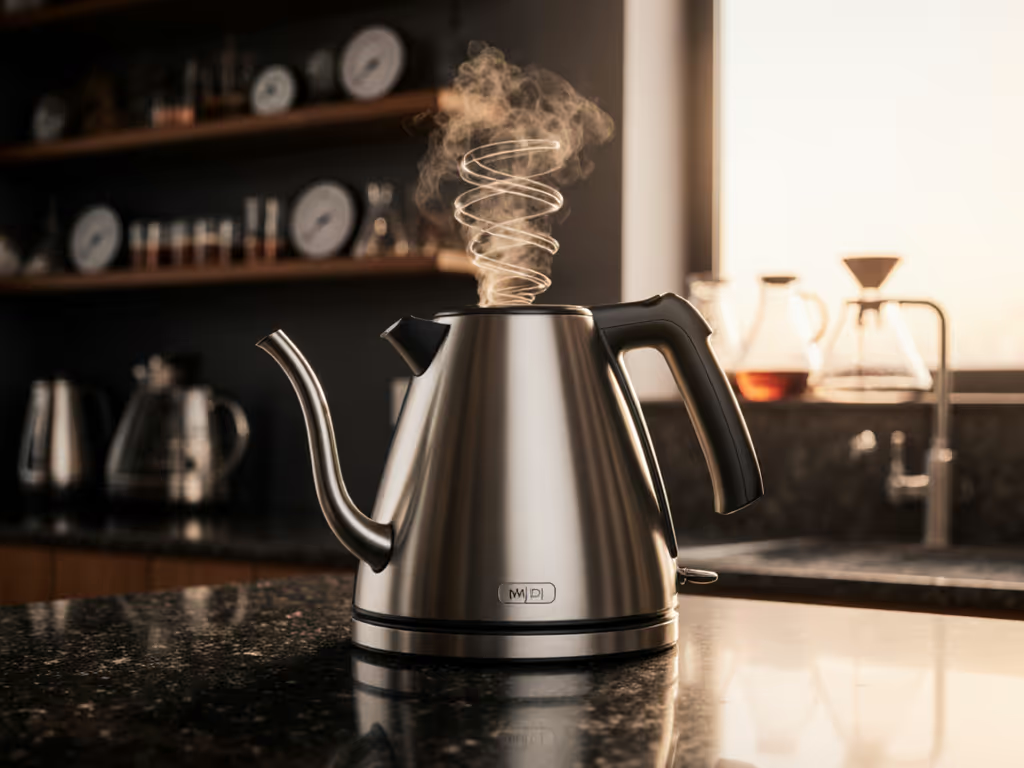
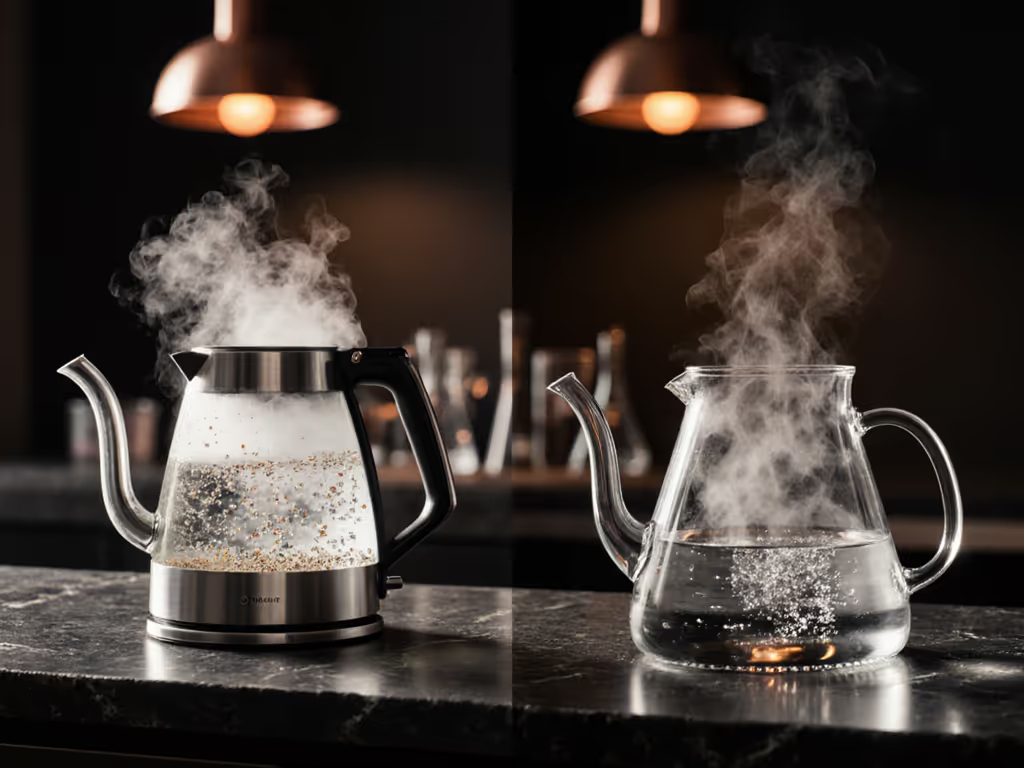
Kettle shape science isn't just for engineers, and small changes in body height, base width, and spout angle quietly shape heat-up time, heat retention, and pour control. When you understand a bit of thermodynamics of kettle design, you can pick or use a kettle that protects flavor and fits your routine.
Precision is a habit, not an advanced setting.
We'll do this together, one brew at a time.
FAQ 1: Does kettle shape really change how fast water heats?
Yes, shape affects how efficiently your kettle turns electricity into hot water, but only in combination with power, volume, and insulation.
What all electric kettles share
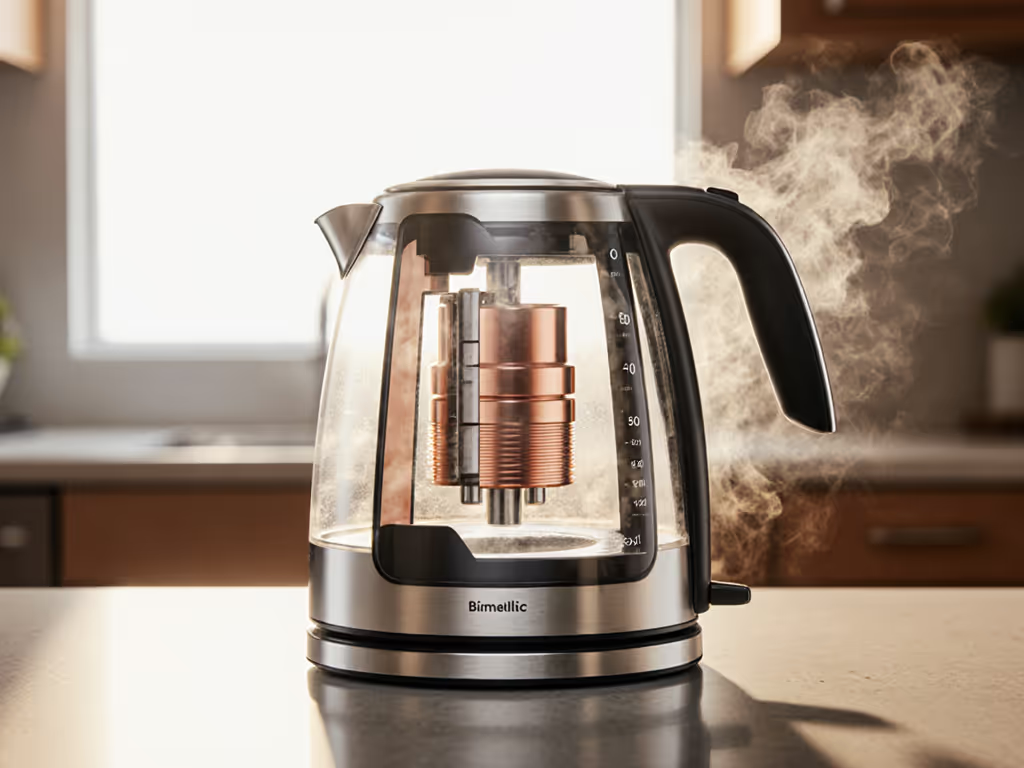
Most electric kettles heat from the base, where a metal plate or coil converts electrical energy into heat (Joule heating). The base transfers this heat into the water by conduction, and then convection currents carry hot water upward as cooler water sinks.[1][6] This circulation helps even out the temperature throughout the vessel.[1][6]
In other words: your water doesn't heat evenly just because the kettle "says 1000 W"; it's the interaction of heating element + water motion + shape.
Why tall and narrow often boils faster
Many efficient kettles use a tall, relatively narrow body.[1] This shape:
- Reduces the surface area of water exposed to air at the top, so less heat is lost there while heating.[1][2]
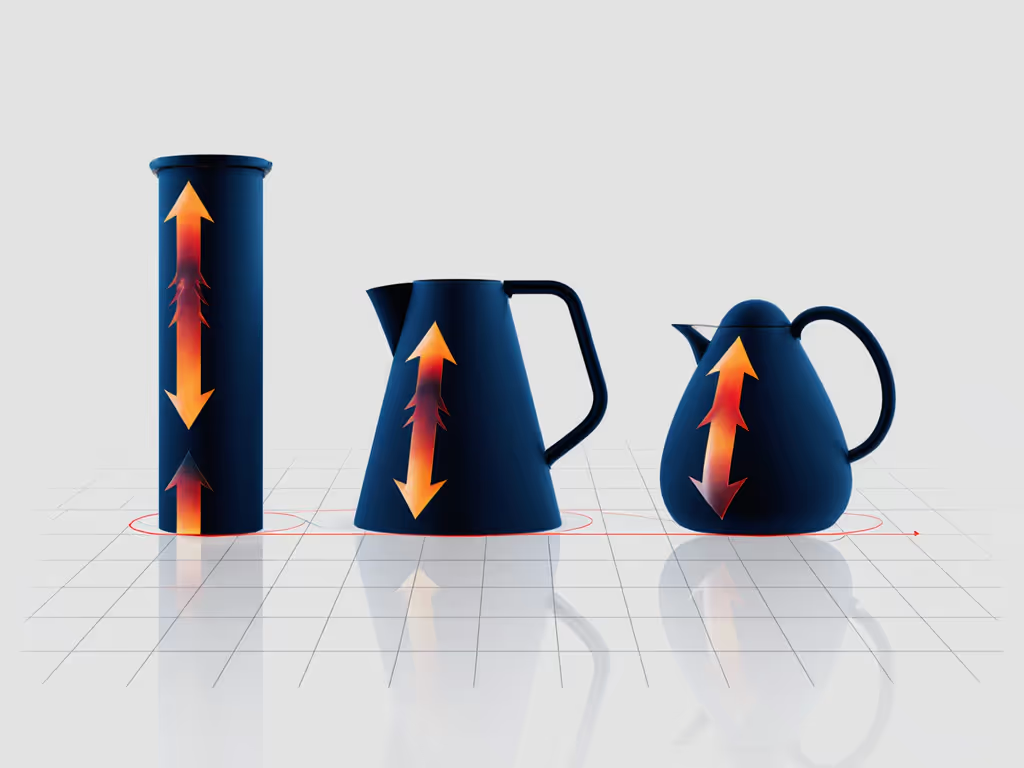
- Channels convection currents into a single vertical loop, so hot water rises and cooler water returns to the base efficiently.
- Keeps more water close to the central "column" of rising hot water, which can speed up equalization.
A wide, shallow kettle exposes more water to air and can lose more heat during the climb to boiling, especially if the lid is loose or opened frequently.[1]
What shape cannot change
From a physics standpoint, it always takes roughly 4,200 joules to raise 1 kg of water by 1 °C, a value known as water's specific heat capacity.[5] Shape cannot change this. What shape does change is how much of the input energy you waste to the room before your brew.
Rule of thumb: For general boiling speed and energy efficiency, a taller, slimmer kettle with a snug lid has an advantage over a squat, open design, especially at larger volumes.[1][2] For broader tactics beyond shape, see our energy-saving kettle guide.
FAQ 2: How does kettle geometry affect heat distribution and temperature accuracy?
This matters if you care about 80-85 °C for green tea, 92-96 °C for pour-over, or baby-safe water. Those degrees disappear quickly in a poorly designed shape.
How water mixes as it heats
- The area right above the element or base plate heats first.[1][6]
- As that water warms, it becomes less dense and rises; cooler water falls to the bottom to be heated.[1][6]
- The smoother the vertical path for this loop, the fewer "dead zones" of cooler water you get.
In a tall cylinder, the hot-upward / cool-downward loop is straightforward. In a very flat, wide kettle, the path is longer and more complex; it can take longer for the entire volume to equalize.
Why this affects your thermometer and setpoint confidence
If your kettle has a temperature sensor near the base or wall, the reading can be slightly ahead of the average water temperature until convection fully mixes the water. According to manufacturer explanations of kettle operation, thermostats and sensors rely on the heat and steam near the heating area or lid to judge when to switch off.[1][6] For a deeper dive into the tech, read how kettle temperature sensors work and how placement affects overshoot and stability.
That's why you sometimes see:
- A kettle that beeps at 80 °C, but your external thermometer in mid-depth reads 75-77 °C.
- A kettle that overshoots set temperature as residual heat in the metal base and element continues to warm water after cut-off.[1]
This is shape-dependent: more uniform, column-like interiors help water mix faster and bring the whole volume closer to the sensor reading.
Practical checks for better temperature accuracy
- After the kettle hits your target, swirl gently (if safe to handle) or wait 10-20 seconds for mixing.
- For very precise brews, measure at mid-depth, not at just the surface.
- If you consistently see a 2-3 °C gap, mentally adjust your setpoint. That tiny calibration is the quiet difference between bitter and balanced.
FAQ 3: Why do some kettles stay hot for ages while others cool in minutes?
That's mostly thermal retention design: shape plus insulation.
Insulated vs single-wall bodies
Many efficient kettles use a double-wall body, often stainless steel with an insulating air or foam layer.[1][4] See our lab comparison of single vs double-wall insulation for real heat retention and exterior temperature results. This helps:
- Reduce heat loss through the sides, so water stays hot longer.[1][4]
- Keep the outer surface cooler to touch, improving safety.[1][4]
One manufacturer example reports retaining close to 90% of original heat after several hours in a well-insulated kettle, illustrating how effective good insulation and sealing can be.[4]
Shape and heat loss
Even without double walls, shape still matters:
- A compact, tall cylinder has less outer surface area for a given volume than a wide, low design, so it sheds heat more slowly.[2]
- A small lid opening and tight seals reduce steam escape.[1][4]
- Spouts with a longer internal path or small cross-section leak less heat and steam when the kettle is idle.
If heat retention matters to you (tea sessions, back-to-back brews), look for:
- Double-wall or clearly insulated designs.[1][4]
- A taller, slimmer body rather than a wide, squat one.[1][2]
- A lid that closes firmly with minimal venting.
FAQ 4: How does kettle shape change pour control for coffee and tea?
Here we move from pure heat to flow control, crucial if you care about channeling in pour-over or gentle agitation for tea.
Most of what follows is based on basic fluid dynamics and user testing, rather than specific lab papers.
Body and handle placement
Pour feels very different depending on how the kettle's mass is arranged:
- A tall, rear-handled kettle brings the center of mass closer to your wrist, making small angle changes finer and more controllable.
- A very squat body with a side handle often feels "swingy," so tiny wrist movements create larger flow changes.
For smooth 4-8 g/s pour-over streams, that closeness and balance matter more than people expect.
Spout geometry
- Gooseneck spouts (narrow, curved) create a more laminar, pencil-thin stream at low angles. They let you control not just flow rate, but impact point and agitation in the coffee bed.
- Short, wide spouts favor fast filling of mugs or pots but tend to gush at higher rates and are harder to keep at a steady trickle.
The internal transition from body to spout also matters: smooth, gradual channels promote consistent flow, while abrupt corners can cause pulsing or dripback. For a side-by-side breakdown of spout designs beyond goosenecks, see our electric kettle spout types test.
For pour-over coffee:
- Favor a tall, narrow kettle with a long gooseneck that exits below the top waterline and a handle aligned with the spout for wrist-friendly control.
For tea service or general kitchen use:
- A moderately tall body with a slightly larger, smooth spout gives a wider range, from gentle green tea pours to fast filling.
If you've ever had jerky flow that ruins a bloom or channeling in your dripper, odds are you were fighting not your technique, but your kettle's geometry.
FAQ 5: Does a tall, narrow kettle always use less energy?
Shape helps, but usage patterns still dominate energy use.
Research on electric kettles shows that real-world efficiency depends heavily on how people fill and use them, not just the hardware design.[9] Overfilling and repeated reboiling waste more energy than any subtle shape advantage.[9]
Shape-wise:
- For the same volume, a tall, narrow kettle usually has less external surface area and a smaller open water surface, so it loses less heat while heating and during short holds.[1][2]
- Good insulation and lid design can matter more than body proportions alone.[1][4]
What you can control directly:
- Heat only the volume you need.[9]
- Use a kettle with solid insulation if you often walk away and return to reheat.[1][4]
- If your kettle cools quickly, consider transferring to a thermally efficient server instead of repeatedly boiling.
Shape helps, but your habits decide most of the energy bill.
FAQ 6: How does kettle geometry affect noise and "boil drama" (rattling, steam, splashing)?
Noise and splashing are both tied to how steam and bubbles escape the hot zone.
From manufacturer and physics explanations of kettle operation:
- As water approaches boiling, bubbles form at the base, rise, and collapse, creating the characteristic rumble.[1][6]
- Steam vents through lid gaps, spout openings, or dedicated channels used to trip the auto shut-off.[1][6]
Shape effects (based on fluid and acoustic behavior):
- A wide, shallow base can create larger bubble sheets that collapse more violently, increasing noise.
- Tall, narrow bodies often channel bubbles upwards in a more orderly column, which can sound "smoother."
- Long, narrow spouts and dedicated steam channels can whistle or hiss more, but also make shut-off more precise by directing steam to the sensor.[6]
If you brew around babies, roommates, or in an open office, look for kettles with:
- A moderately tall, not extremely wide base.
- A snug lid and no large open vents.
- Marketing or user tests that explicitly mention quiet operation, since that often correlates with thoughtful steam and bubble path design.
FAQ 7: What kettle shapes are easiest to clean and maintain under hard water?
Hard water builds limescale faster, especially on bases and tight corners. Shape can make descaling either a quick rinse or a dreaded chore.
Based on general cleaning and maintenance advice for kettles:[1][4] If hard water plagues your area, use our hard water kettle descaling guide for region-tailored protocols and products.
- A wide lid opening makes it easier to reach the base with a brush or cloth.[1][4]
- Smooth, gently curved interiors help prevent scale pockets and are faster to scrub.[1][4]
- Tight gooseneck spouts are harder to descale internally; they often need soaking or specialized brushes.
If you live in a hard-water region and want low-maintenance gear:
- Choose a kettle with a large, fully removable lid.
- Prefer simple, accessible curves over complex internal ridges.
- If you love a gooseneck for pour-over, pair it with a simple, easy-to-clean boiling kettle, and only use the gooseneck as a serving/pouring vessel.
Regular descaling not only keeps your kettle efficient; it also protects taste and prolongs the life of heating elements and seals.[1][4]
FAQ 8: How can I use kettle shape science to improve my daily brews right now?
You don't need new gear to start; you can work with the shape you already own.
Here's a simple, shape-aware checklist:
-
Map your hot and cool spots
Heat water to a mid-range temperature (e.g., 80-85 °C), then measure at the surface and mid-depth. If there's a gap, give a gentle swirl or wait 10-20 seconds before brewing. -
Match pour style to geometry
- If your spout is wide and gushes, use shorter, lower pours and accept a slightly faster flow.
- If your kettle is tall and well-balanced, practice holding a steady angle to maintain a constant stream.
-
Exploit insulation and shape for retention
If your kettle is double-walled or tall and narrow, use it as your "thermal flask" between brews. If it's single-wall and wide, pour into an insulated server as soon as you hit target temperature. -
Adjust setpoints to reality
If you learn that your kettle's 80 °C reading equals ~77 °C in the cup, adjust your presets a couple of degrees. That small tweak can transform a bitter green tea into something soft and sweet, the sort of shift many people only notice the first time they try a properly controlled brew. -
Observe, note, repeat
Spend one week jotting down what shape seems to help or hinder: speed, noise, flow, and how often you reboil. Small observations today become automatic habits tomorrow.
Kettle shape science isn't about turning your kitchen into a lab; it's about letting design work with you. As you notice how kettle geometry affects heat distribution, thermal retention, and brewing impact, you'll build quiet confidence that your kettle is a tool, not a variable fighting your flavor.
From there, future upgrades become easier: you'll know exactly which shapes support the way you like to brew (and which to skip), so you can keep exploring, one thoughtful, repeatable kettle choice at a time.
Related Articles