Why Variable Temperature Kettles Have Different Ranges
By Ava Osei • 19th Mar
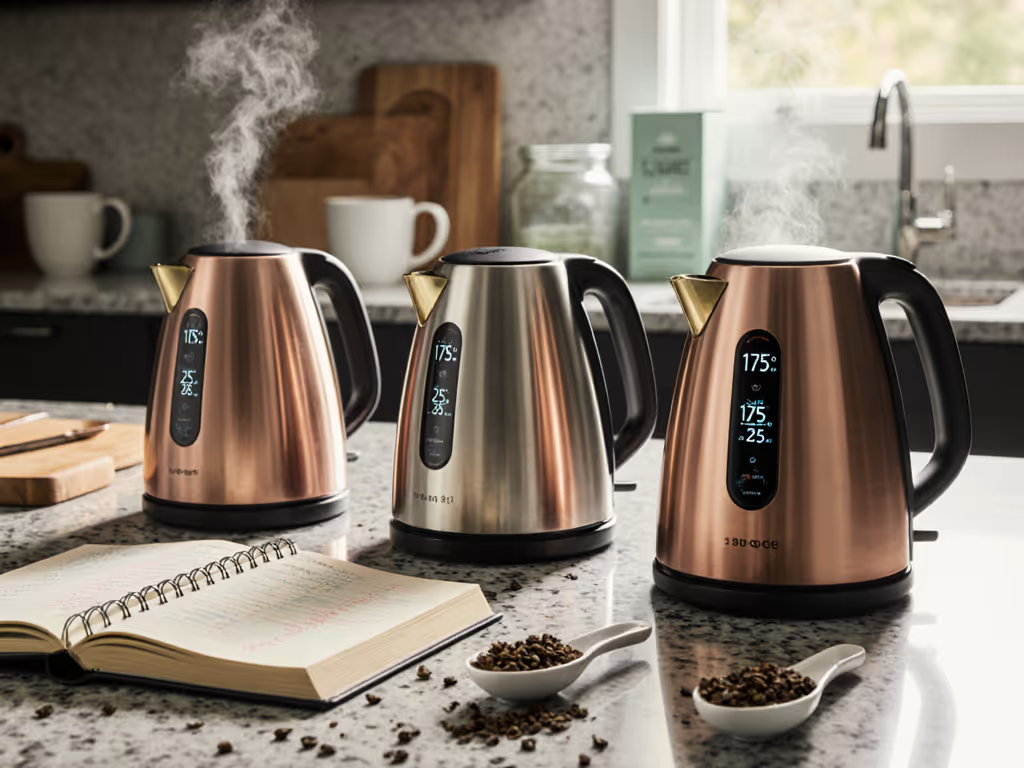
If you've shopped for an electric kettle variable temperature model, you've likely noticed something puzzling: no two kettles seem to offer the same temperature range. One goes from 40°C to 100°C, another from 20°C to 100°C. Why the difference? The answer lies in engineering choices that directly affect how you brew, and whether your morning ritual delivers the flavor you expect, cup after cup.
Let's unpack this so you can make an informed choice without the marketing fog.
What Temperature Ranges Actually Mean
Q: Why don't all kettles start and stop at the same temperature?
Different kettles have different ranges because manufacturers design for different use cases. A kettle aimed at tea enthusiasts might include a very low setting (60°C) for delicate white teas, while one marketed primarily for coffee might start at 40°C to cover everything from baby formula to French press. The lower bound reflects the coldest water someone might reasonably want to hold ready; the upper bound is always boiling (100°C or 212°F).
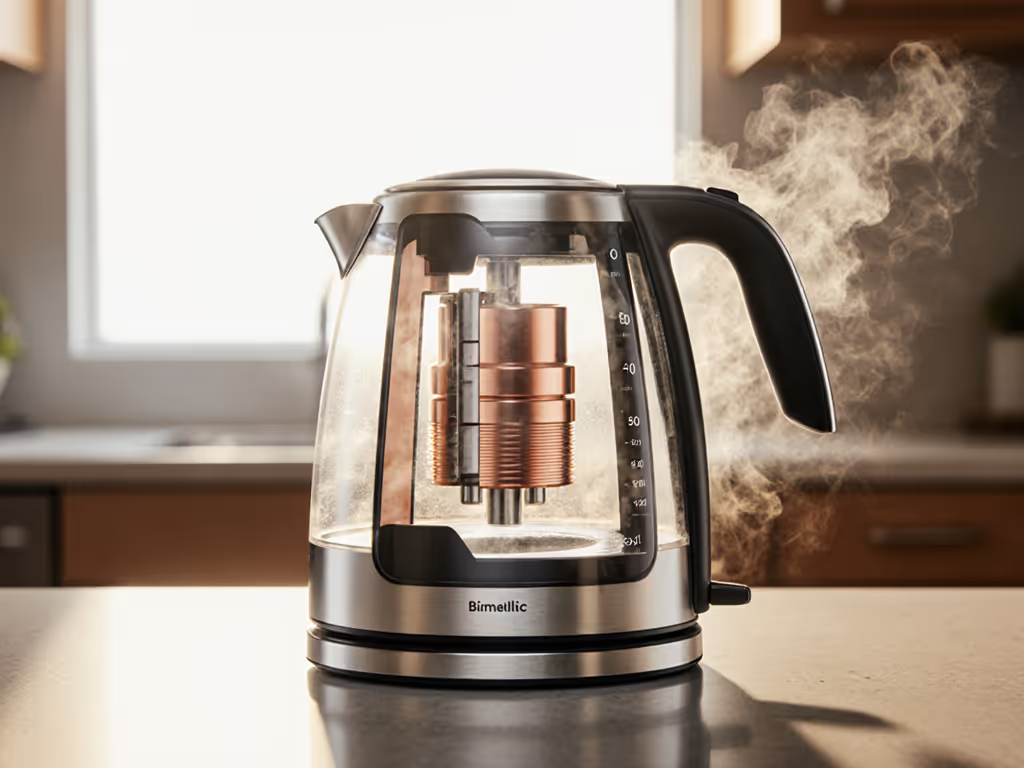
The spread isn't random; it's a reflection of the heating element design principles and the thermostat technology chosen. A kettle engineered to maintain 60°C uses different sensor sensitivity and control logic than one with a 40°C floor. Broader ranges don't automatically mean better; they simply mean the manufacturer anticipated a wider audience. For a quick decision framework, see our variable temp vs basic comparison.
Q: Does a wider temperature range actually make a kettle more useful?
Not necessarily. What matters is accuracy within the range you actually use. If you brew coffee and black tea exclusively, a kettle spanning 40°C to 100°C offers no real advantage over one that covers 60°C to 100°C. The real value lies in the kettle holding your chosen temperature reliably, something we'll examine next.
How Temperature Accuracy Works in Practice
Q: How close do kettles actually get to their set temperature?
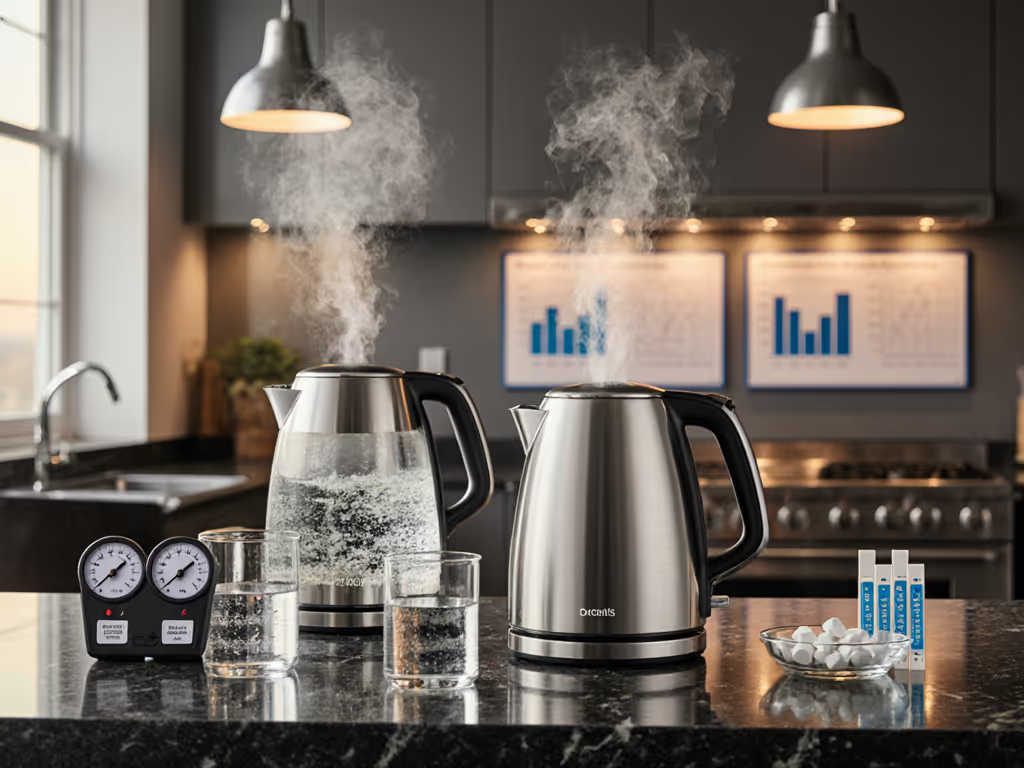
This is where data replaces guesswork. See our lab-tested accuracy results for cross-brand measurements. Independent testing using calibrated thermometers reveals that quality kettles typically land within ±0.5-1°C of their displayed setpoint. That's remarkably precise for a countertop appliance.
However, and this is critical, the readout on your kettle's display might drift over time. A kettle that displays "80°C" could actually be 76°C or 82°C once it's aged, depending on sensor calibration. This doesn't render the kettle useless; it means that consistency within a single kettle matters more than trusting the absolute number.
Q: What's the difference between presets and manual temperature control?
Some kettles offer six or eight fixed buttons (like 80°C for green tea, 95°C for black tea), while others let you dial any temperature in between. Both approaches work. Presets save you from decision fatigue and encode expert recommendations into the design (small changes, big flavor) since the manufacturer has already identified the optimal temperatures for common brews. Manual control offers flexibility if you like to experiment or have unusual preferences.
For beginners, presets often prove less intimidating and eliminate the risk of overshooting. For repetition-minded brewers who use the same method daily, presets become a checklist-driven shortcut: press green tea, pour, set timer. No thought required.
Temperature Stability: Holding What You Set
Q: Why does it matter that a kettle holds temperature, not just reaches it?
Reaching 80°C is one thing; keeping it there while you measure leaves, warm your cup, and pour is another. A kettle with poor temperature control might overshoot to 82°C, then cool to 76°C by the time your water is ready. You'd never know, and your green tea tastes slightly different each brew.
Quality kettles maintain their target within tight bands over extended periods. Industry testing shows that after 10 minutes off the heat, premier kettles hold within ±0.5-1°C of setpoint, stable enough that a second or third cup tastes identical to the first. We verified this in our top variable temperature kettles roundup focused on thermal stability.
Q: How long can you safely hold water at a set temperature?
Most variable temperature kettles hold water at a selected temperature for 20-30 minutes before cycling off or requiring a manual reset. This is deliberate: it prevents energy waste and eliminates the risk of prolonged overheating, which can damage the heating element or degrade taste compounds in tea. If you're serving a small group or making a second brew within 20 minutes, one fill-up covers you. For longer waits, you'll reheat, a small ritual that reinforces freshness.
How Different Kettles Achieve Temperature Control
Q: What's the mechanical difference between reaching and holding a target temperature?
Kettles use one of two main strategies, and each has trade-offs.
Strategy 1: Slow approach. The kettle heats normally until approaching your target, then reduces power and creeps toward the setpoint. Think of it as a dimmer switch that eases off as it nears the goal. This method is smooth, predictable, and often fast. Quality kettles reach your target in under four minutes.
Strategy 2: Boil and cool. The kettle heats water to boiling, then cools it passively or via cold-water dilution until the target is reached. This works but is slower and less precise over repeated cycles.
For beginner workflows and safety (the core of my philosophy) the slow-approach thermostat technology is preferable. For the engineering behind precision and overshoot, read how kettle temperature sensors work. It requires less intervention and produces fewer surprises.
The Range Question Revisited: What You Actually Need
Q: Should I prioritize a wider range or tighter accuracy within a narrower band?
Accuracy beats breadth. If a kettle offers 40°C to 100°C but drifts by ±2°C over months, and another offers 60°C to 100°C but stays within ±0.5°C, the second serves you better. Your precision is a habit, not an advanced setting, built into the design, not your vigilance.
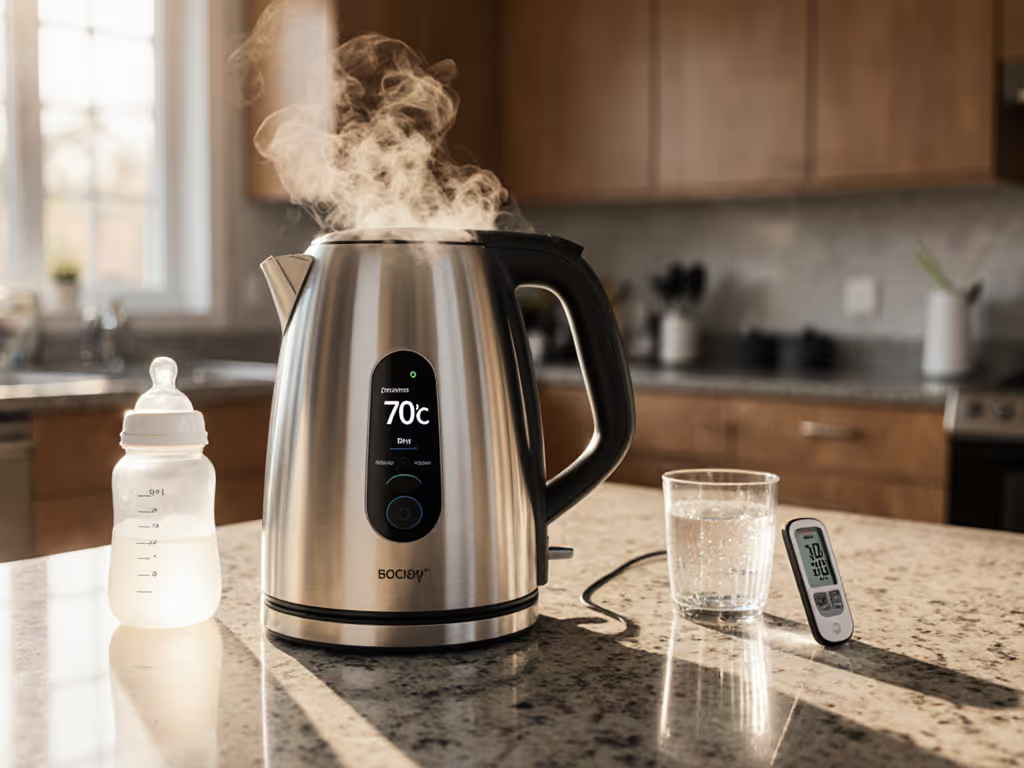
That said, a practical range of at least 60°C to 100°C covers virtually every beverage: baby formula (60-70°C), green and white tea (75-85°C), oolong and black tea (90-95°C), and boiling water for coffee or herbal blends (100°C).
Q: Do I need manual fine-tuning, or are presets enough?
For consistent, repeatable brewing (the foundation of good flavor) presets are sufficient and often superior. They encode expert research into physical buttons. You press "green tea," the kettle sets 80°C, and you're guaranteed the same result tomorrow. No guesswork, no drift, no second-guessing.
Manual control shines only if you regularly brew unusual blends or like to tweak. For most households, presets become the repeatable step in your checklist.
The Safety and Efficiency Layer
Q: Does a wider temperature range use more energy?
Not significantly. Energy use depends on volume, heating element power, and insulation, not the range of available setpoints. A kettle that can reach 40°C uses the same wattage as one that starts at 60°C; the difference is in the thermostat logic, not raw electricity.
What does save energy: heating only the water you need. A kettle holding 1.7 liters takes longer to heat than one holding 1 liter. Get practical energy-saving tips for kettles that cut cost per boil. For individual tea drinkers or a single pour-over cup, a smaller capacity kettle (or filling your variable-temp kettle only partway) cuts both heating time and electricity per use.
Q: Are there any safety implications of different temperature ranges?
Yes. Kettles that allow extremely low temperatures (below 60°C) require clear user labeling to prevent unsafe water for formula or immunocompromised households. Conversely, kettles locked at boiling are safer for homes with young children but less flexible for tea. Choose a range that matches your use case, then treat the minimum temperature with the same respect you'd give any safety feature: read the manual, understand the purpose, and use it deliberately.
Putting It Together: A Simple Decision Path
Variable temperature ranges differ because manufacturers optimize for different brewing contexts and user skill levels. A kettle's true value isn't the span of temperatures it can reach, it's whether it reaches your temperatures accurately, holds them steadily, and lets you repeat the same brew dozens of times without variance.
Look for kettles offering at least 60°C to 100°C with heating systems that hold temperature within ±1°C. If the kettle includes presets aligned with your brews (green tea, black tea, coffee), that's a shortcut; if you prefer manual control, confirm the dial is clear and the heating element design supports precision down to single-degree increments. Check independent reviews noting accuracy over time (not just out of the box).
Most importantly: once you've chosen your kettle, use it the same way every morning. Set the temperature, pour with the same hand, time your steep consistently. Precision is a habit, not an advanced setting. Small changes compound. A friend once swore green tea tasted bitter no matter the brand; we set the kettle to 80°C, poured gently, and timed the steep. Their face at the first sip said everything, not because the gear was fancy, but because it made consistency easy, cup after cup, like clockwork.
The range on your kettle matters far less than the rituals you build around it. Choose thoughtfully, brew deliberately, and taste the difference.
Further Exploration
Ready to deepen your understanding? Consider researching independent kettle reviews that include temperature stability tests over 30-day periods, since these reveal which models hold accuracy longest. Explore the specific brew temperatures for your favorite teas or coffee styles; many specialty roasters and tea vendors publish their recommendations with rationale. Finally, if you're brewing in a hard-water area, investigate kettles with easy descaling features; even precise heating elements can drift if mineral buildup interferes with sensor contact. Small investments in knowledge and maintenance ensure your gear works as intended, year after year.
Related Articles